It’s been a long time since I really used fountain pens in anger. Once upon a time I used to write a first draft with pen and paper and then type it up to create the second draft, but somewhere in the recent past I stopped writing with pen and ink and started doing everything on a laptop. Recently I’ve realised I spend far too many hours in front of a screen and it is time I started unplugging and spending more time in analogue pursuits.
I’ve long been a fan of fountain pens and they’ve been my preferred writing tool since I was a kid and so I dug out the last remnants of my greatly diminished collection. (There were only three survivors).
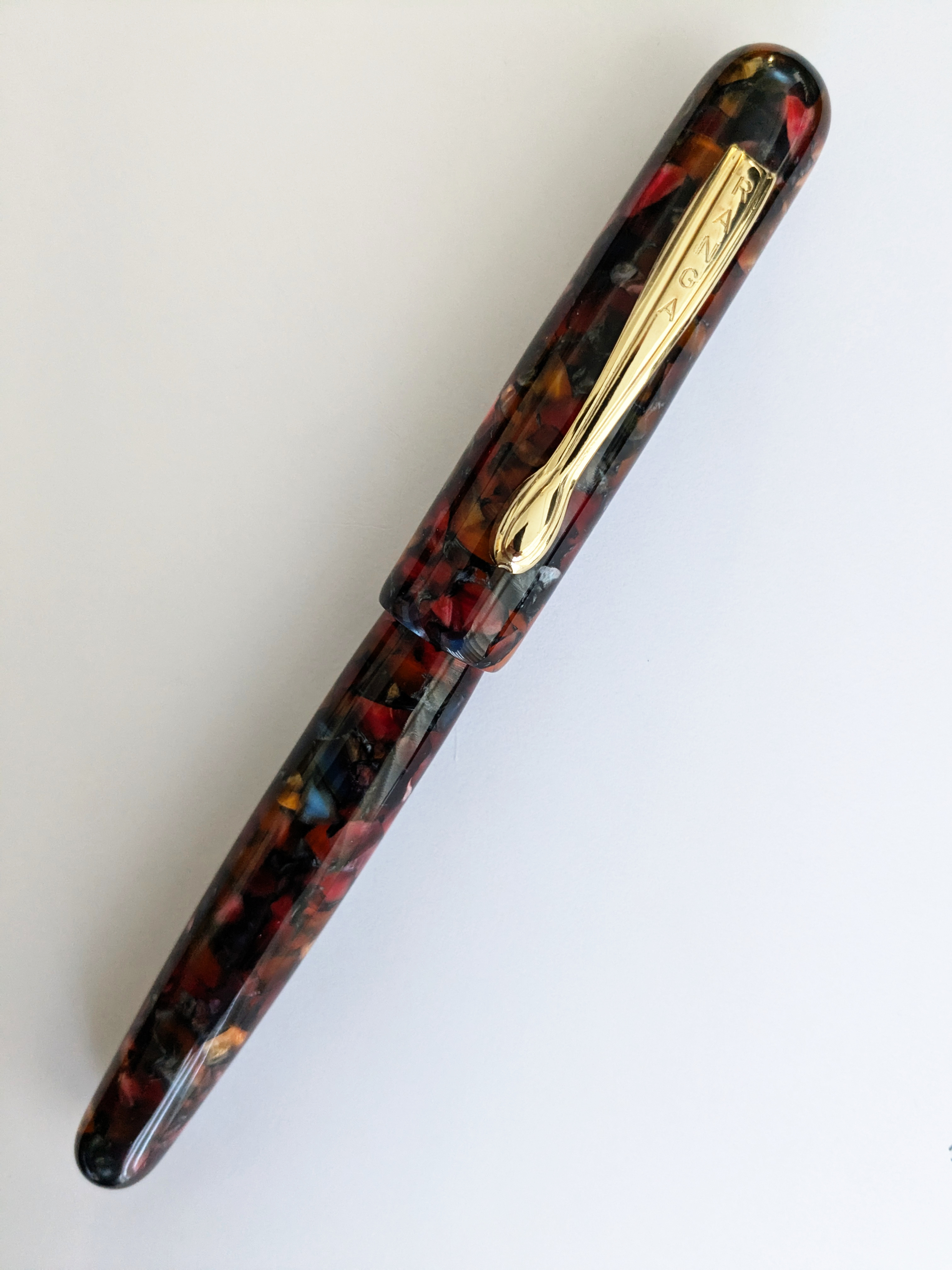
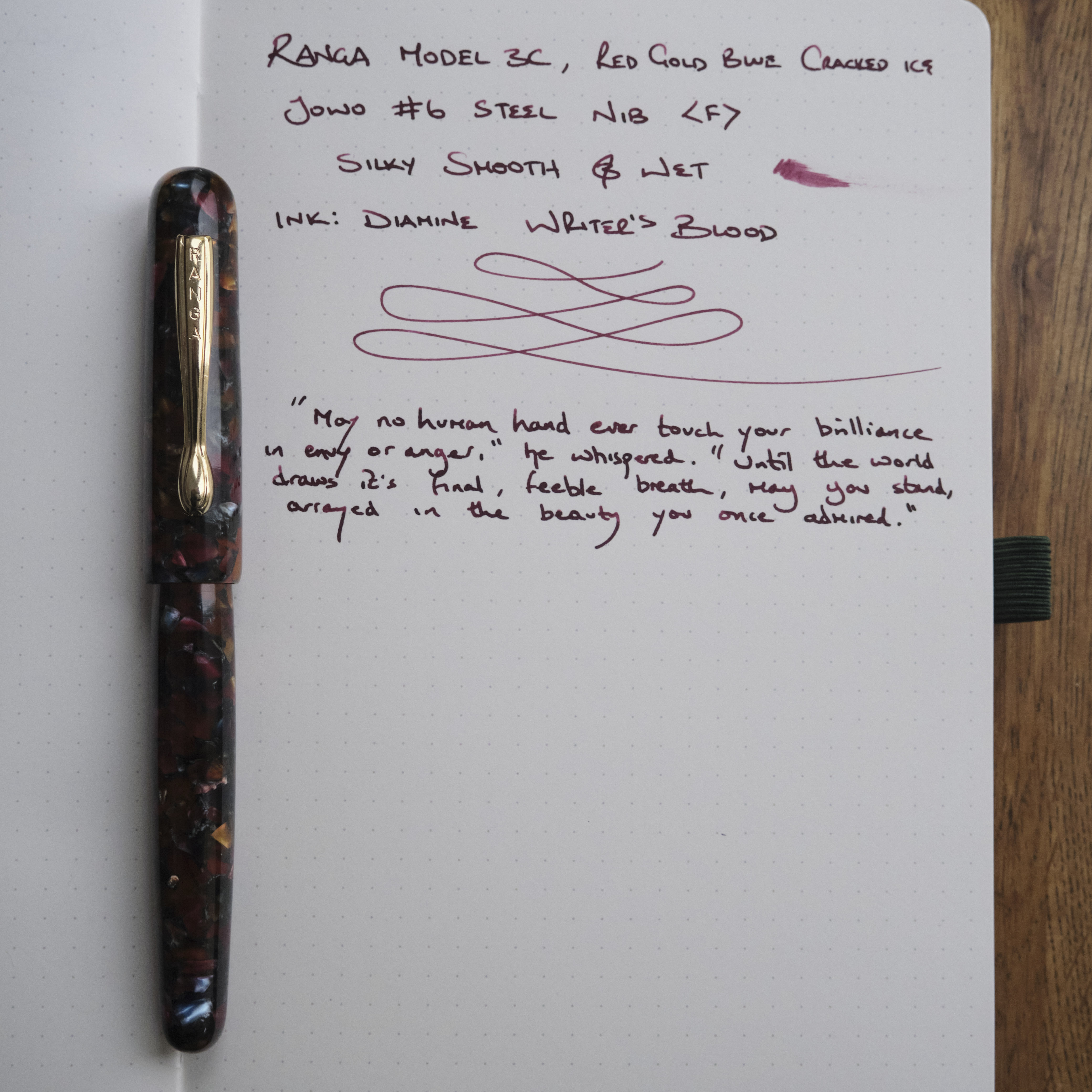
It was time to rebuild my collection and soon had a rather large wish-list. While watching review after review, one pen company stuck out more than others and that was an Indian company making hand made pens called Ranga. I’d heard of them before, but never paid much attention to them, until now. They have a large number of models, but the 3C was the one that appealed the most and the moment I saw the red, gold and blue Cracked Ice Acrylic, I knew that was the one for me. The ordering process was simple and not only was there a choice of acrylic, but the choice of clip and nib. Two weeks later it arrived – much quicker than expected.
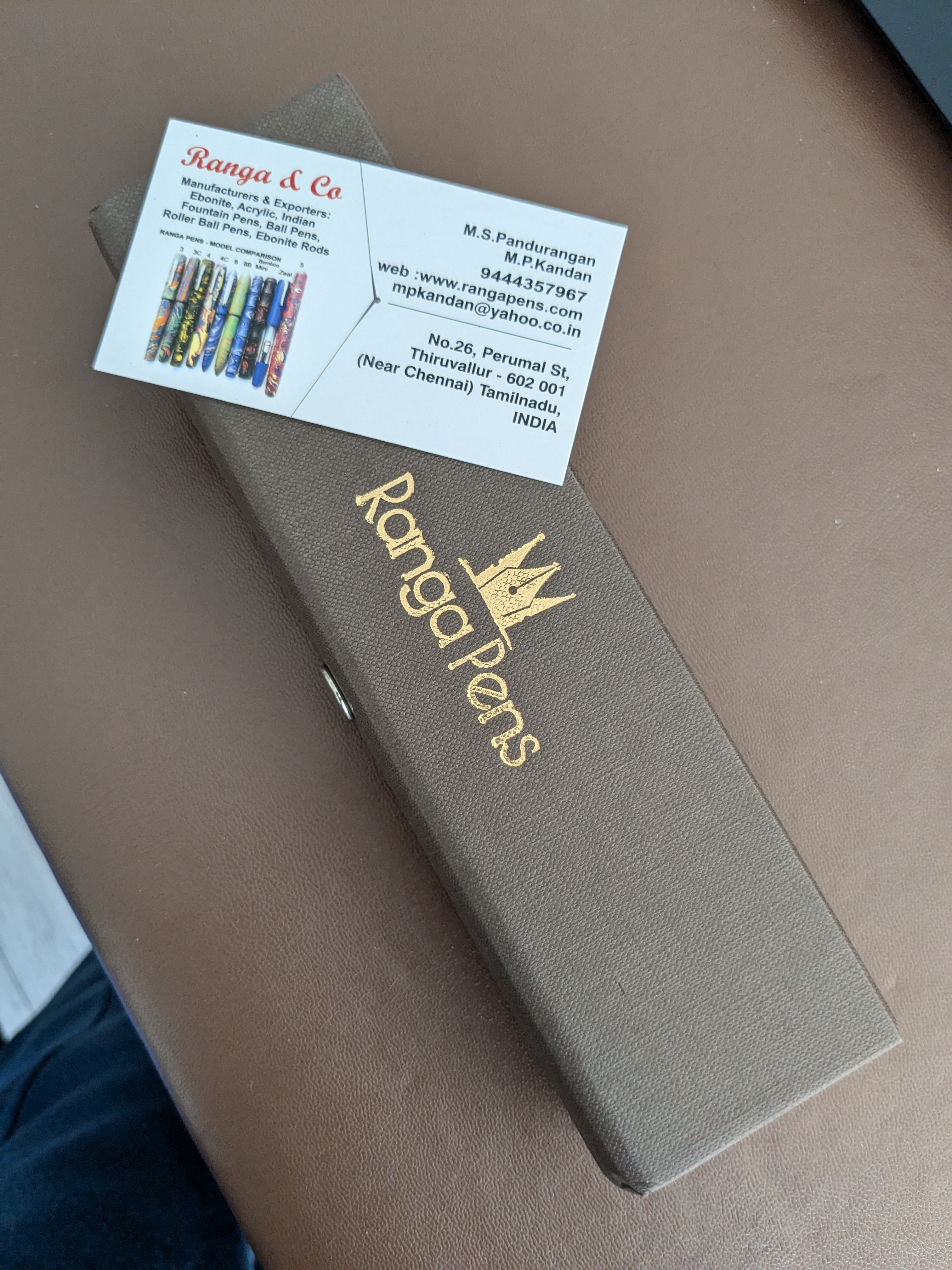
The pen came boxed, wrapped in newspaper and then placed in a cloth bag and hand stitched, which I thought was a nice touch. Opening the box I was surprised by a cheap Jinhao 599A Lamy Safari clone which was included as a free extra (a very nice touch), along with an eyedropper. I can’t think of another pen company that treats the customer so well?
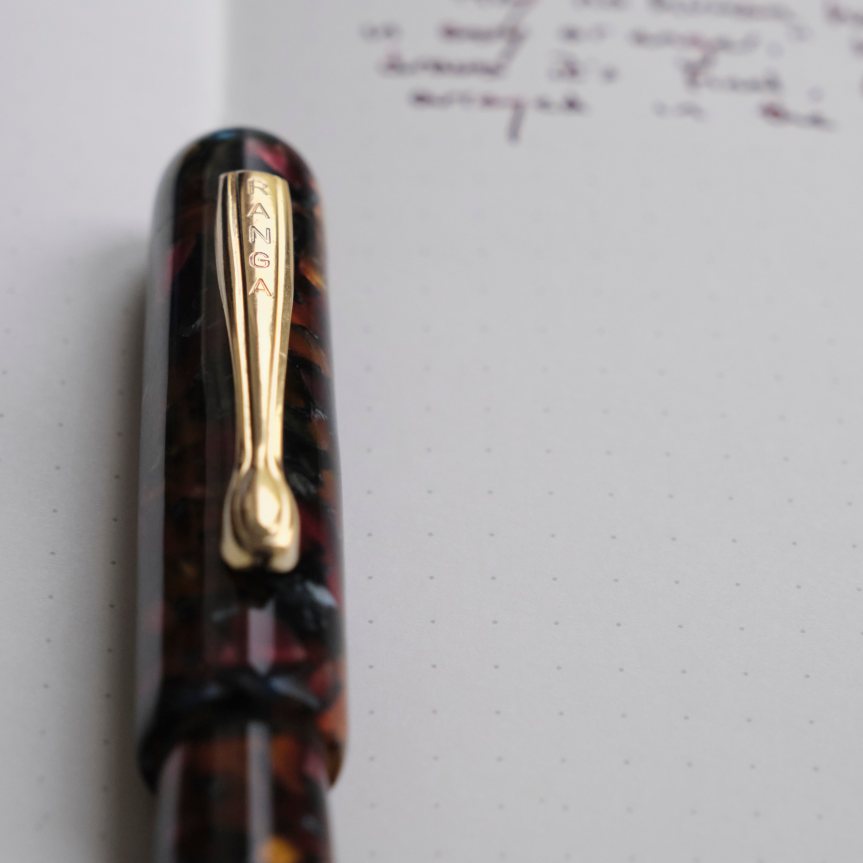
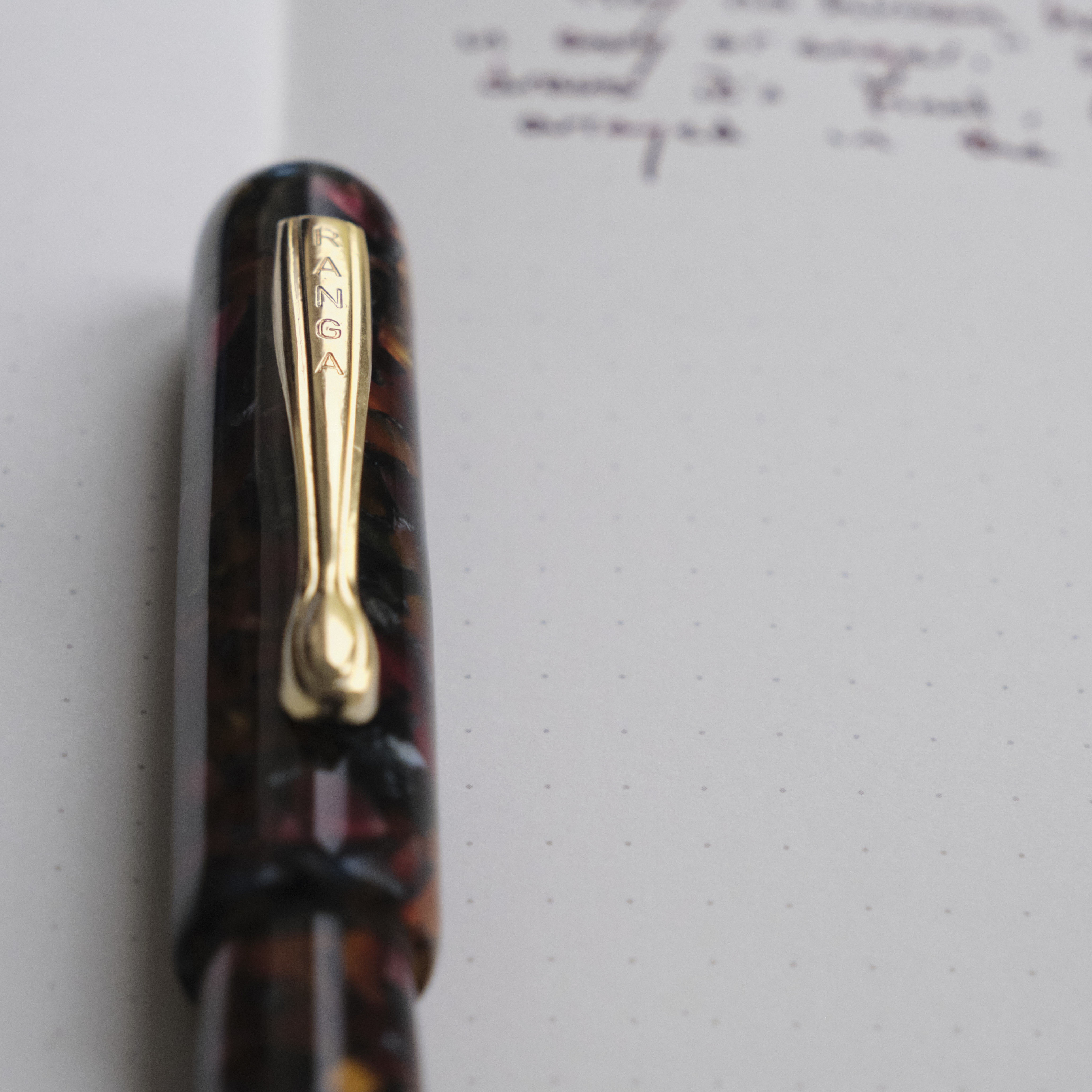
Of course, the packaging and the free pen are one thing, but if the main attraction is a disappointment then no amount of freebies is worth it. When I slid the pen from it’s plastic sleeve, I was very happy. My expectations were not only met, but exceeded, by a country mile. The resin is stunning with a not-quite-black base and flecks of red, amber gold and sky blue resin. Considering it is a handmade pen, the workmanship really shows. I believe the appropriate term is craftsmanship. The acrylic is well polished and brings out the colours. The top of the cap is a separate piece and you can just about feel the join. The clip is a nice design and has just the right amount of spring; not too stiff and not too light.
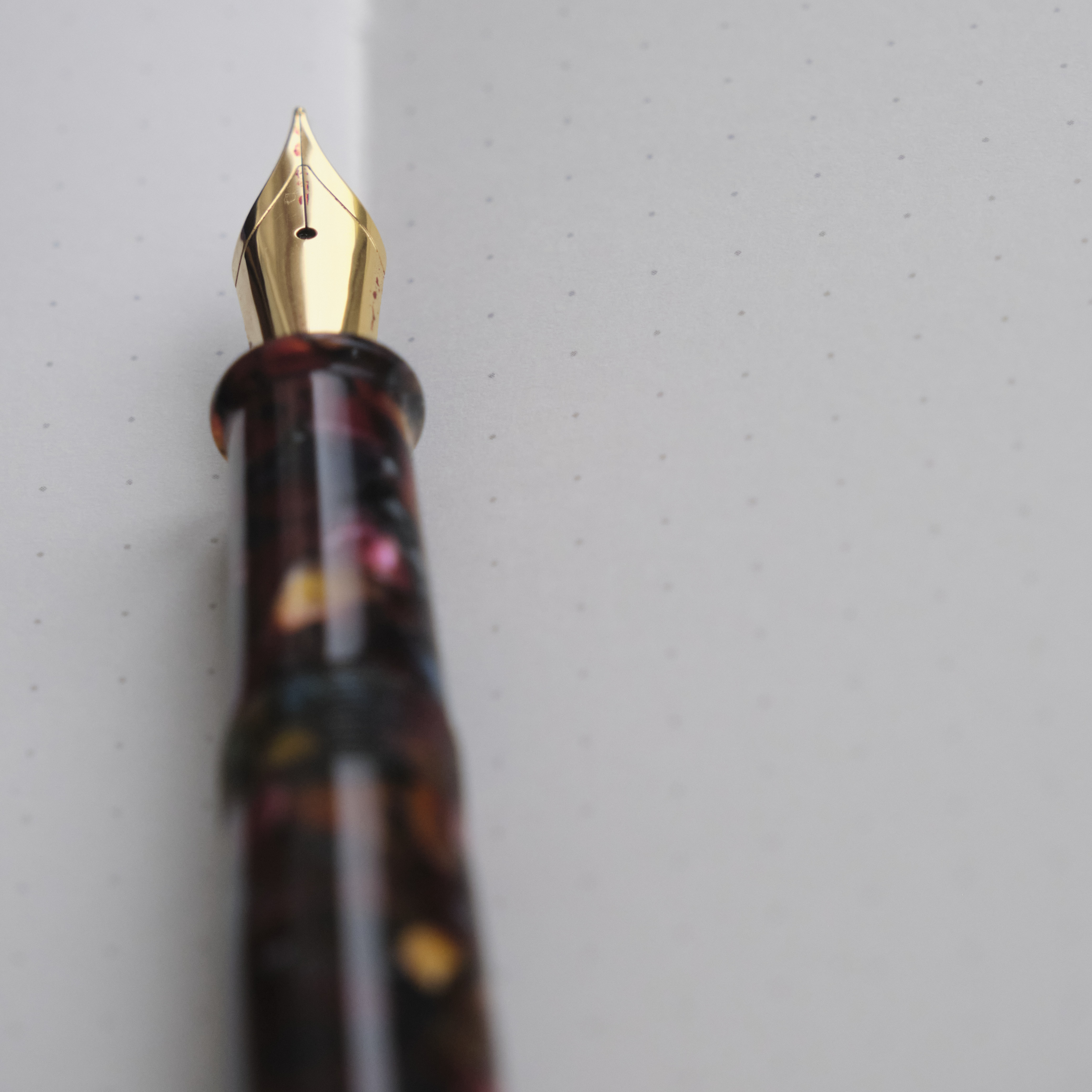
The pen has rounded ends, having a torpedo shape and is, what is now considered, a medium sized pen. Compared to something like a Parker Sonnet or Jotter, this is quite a substantial pen, however, it is lightweight and comfortable to write with. The grip is long enough that I can hold it without touching the threads, though the threads aren’t sharp. There is also no step down from the barrel to the section, which I prefer. At the end of the section is a flared end and the fingers sit nicely against it. Again, it’s just a well thought out design that adds to the writing comfort. The barrel and section threads are resin to resin with no metal parts, so the pen can be eye-droppered, and the section threads are already coated in silicon grease if you want to do that. The cap to section threads are also resin to resin, so no worries about the threads wearing out.
The pen comes with a huge choice of nibs and for this I went with a Jowo #6 steel nib in fine point, and being a German made nib it is true to a Western fine. The included Schmidt converter had water droplets in it – a sure sign the pen had been inked to test and tune the nib, which I like to see. Again, it shows a level of care for the final product that they do this and boy does it show when writing. The nib is silky smooth, probably the smoothest writing experience I’ve ever had. Really is a joy to write with, in fact it makes me want to pick it up and write. The nib is also wet, helping the nib glide across the paper. Being fitted with a Jowo nib, the available options are extensive and also makes nib swaps easy, though I probably won’t be touching this nib as it writes perfectly for me.
Gallery
Dimensions and Specs
- Make: Ranga
- Model: 3C
- Colour: Red, Gold and Blue Cracked Ice (Very similar to Leonardo’s Millefiori resin)
- Length with Cap: 150mm
- Length without Cap: 138mm
- Length Posted: 183mm
- Weight (with inked converter): 27gm
- Barrel Diameter: 14mm
- Section Diameter: 11mm-8mm
Wrapping up
I honestly can’t say enough good things about the Ranga 3C. A beautiful hand-made pen that provides the best writing experience I’ve ever had with a fountain pen. My only complaint is that now I want another one. I suppose there are worse problems to have 😉.









 WeavingLight