Back to Wat Pa Pradu

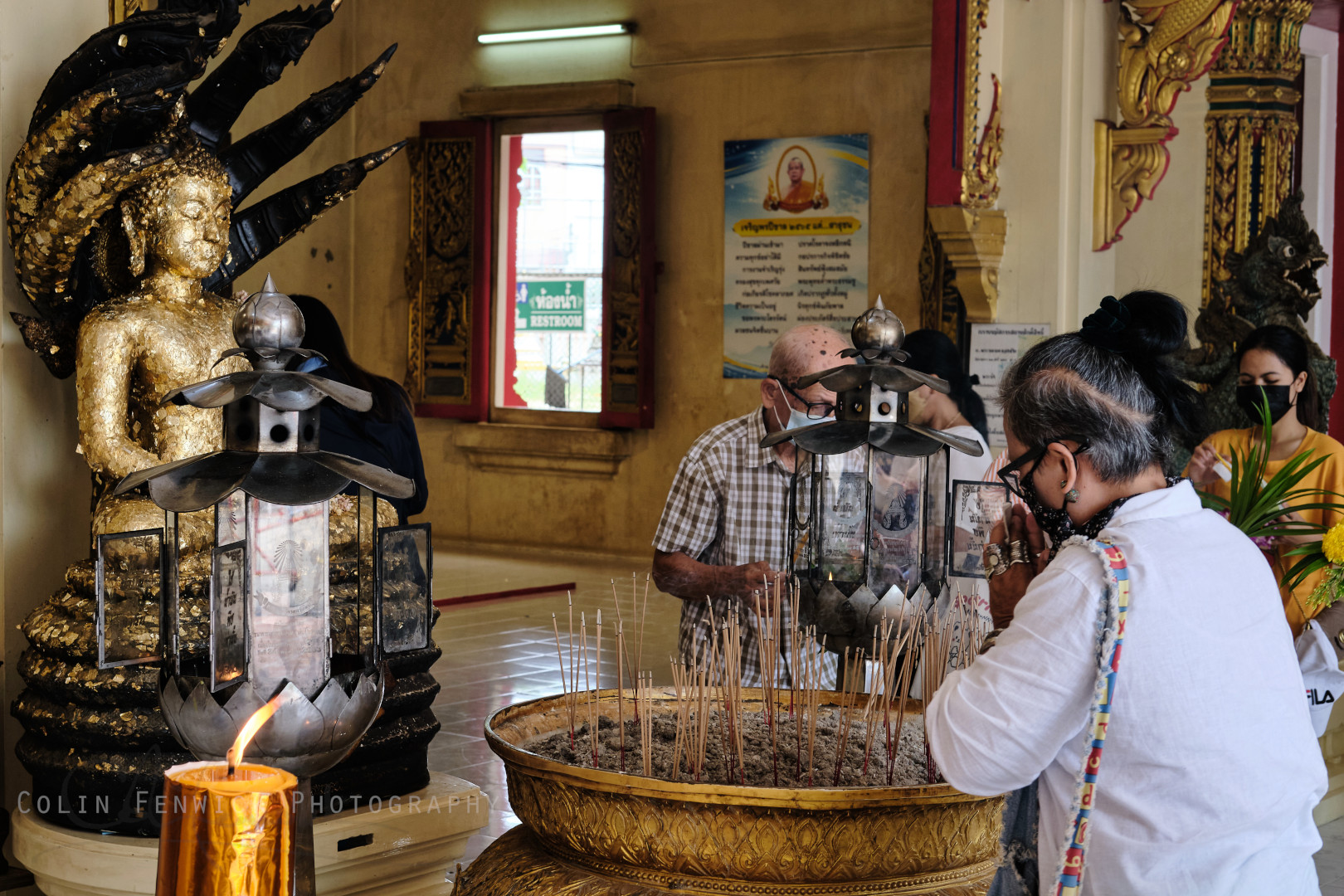
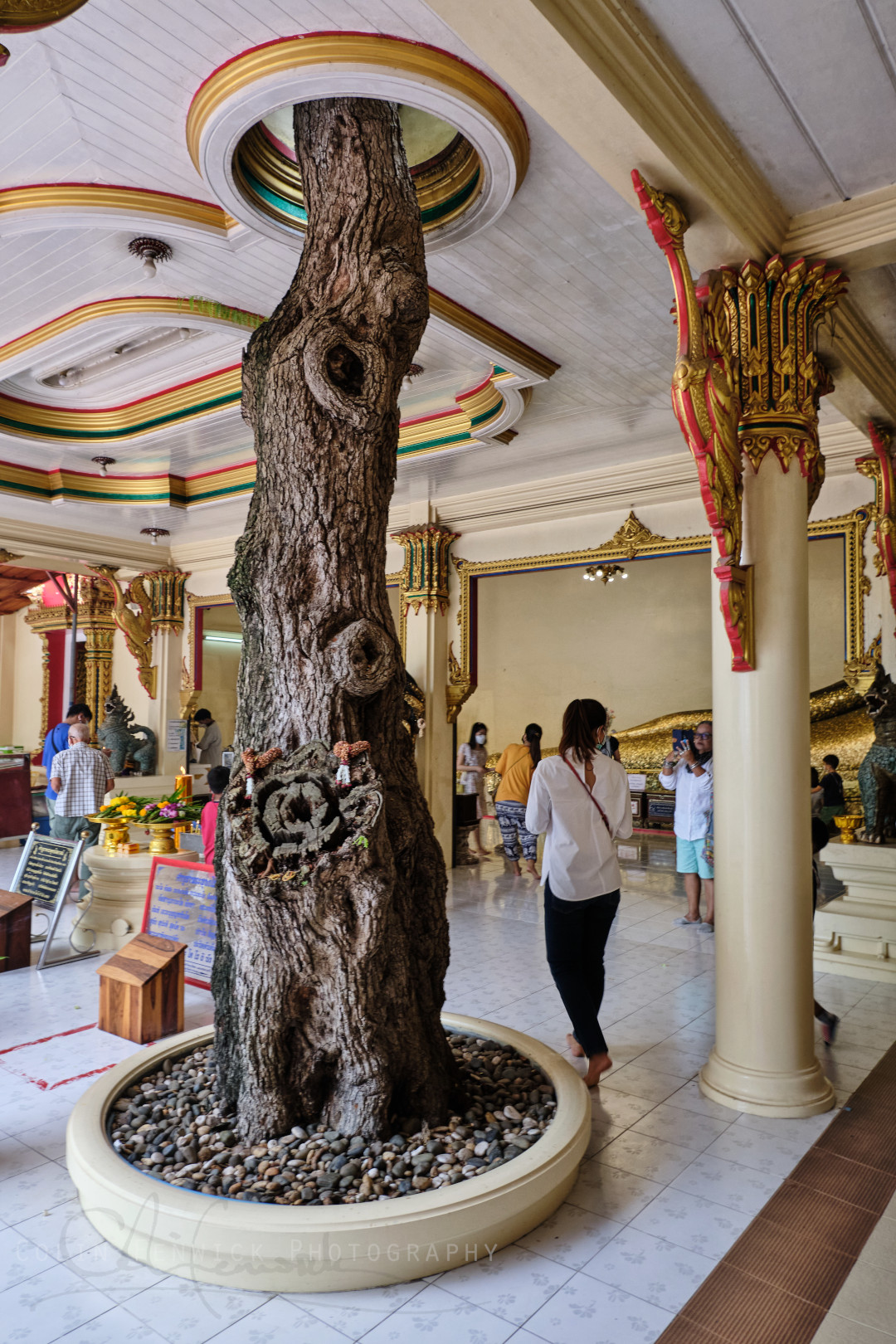
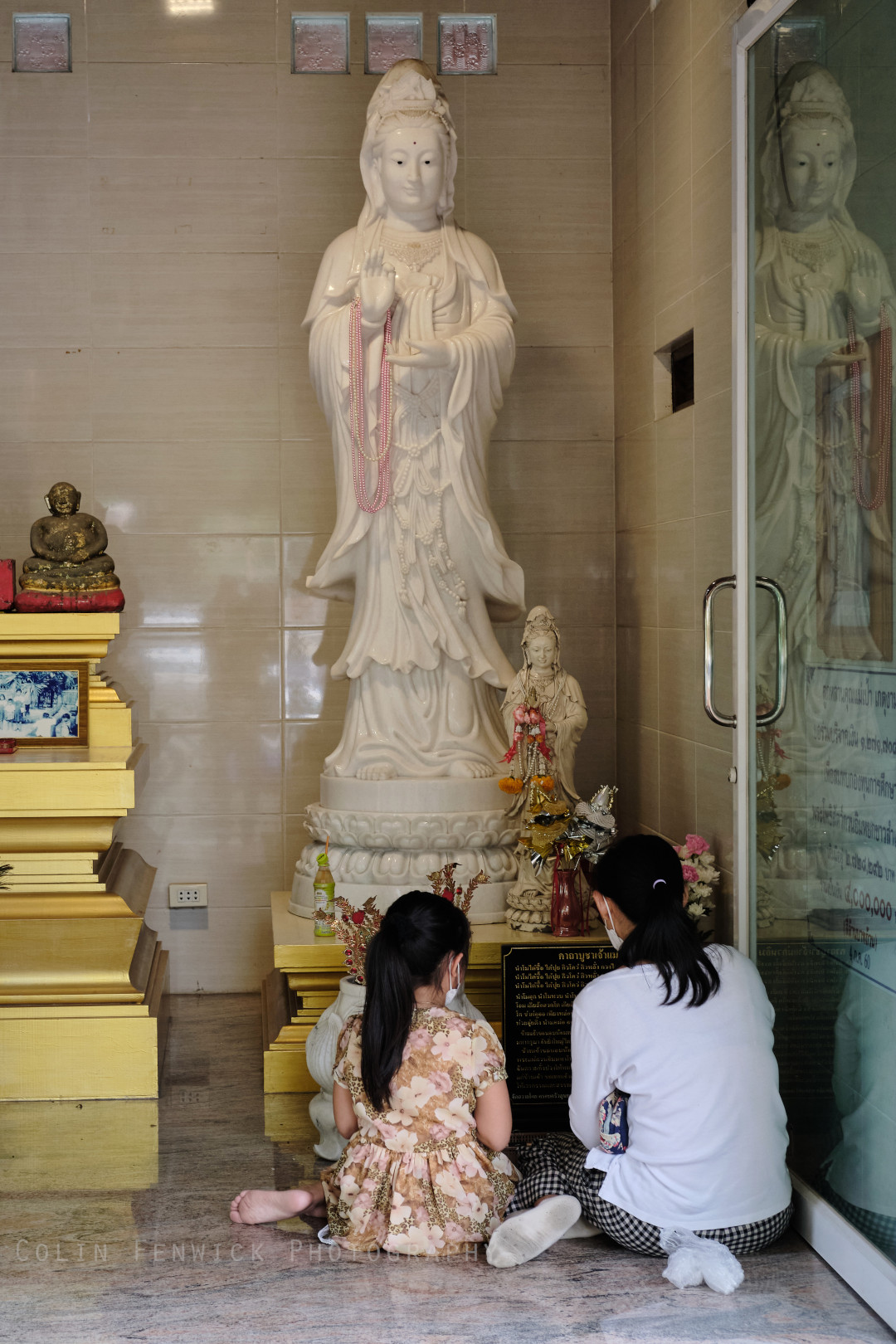
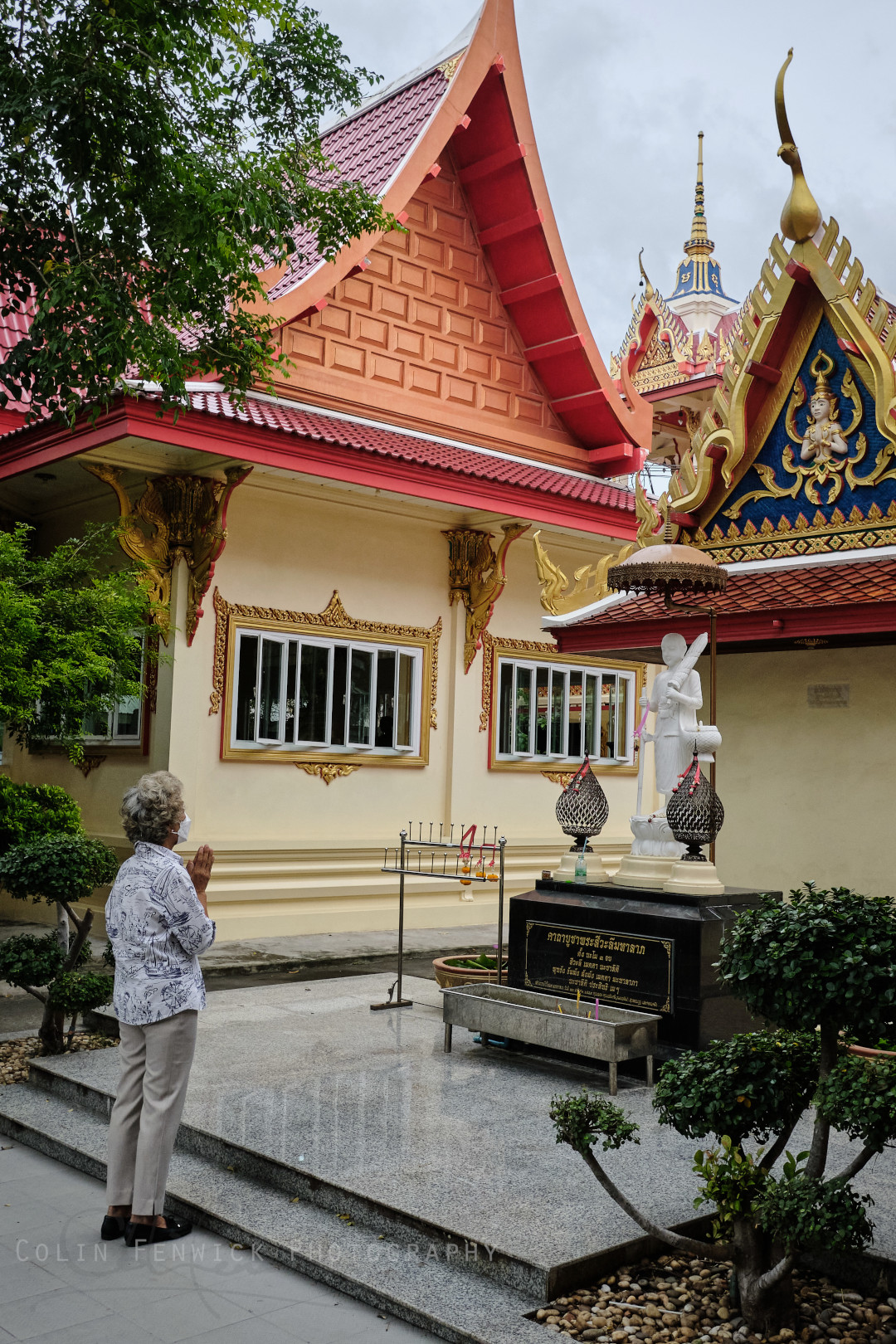
Asahna Bucha Day saw me revisit one of my favourite Thai temples, Wat Pa Pradu. The original Wat was built during the Ayutthaya period, though the original buildings have all been replaced or rebuilt. One of the smaller buildings (bosth – which has a similar meaning to church) is actually an original building dating back to the late 1700s and some of the original stones are housed underneath. You can crouch and crawl underneath to view them (though most locals will do this multiple times for luck and prosperity), but there isn’t a lot of room, so banged heads and back ache tend to result.

Wat Pa Pradu is known for it’s left leaning Buddha, which is covered in small squares of gold leaf placed by worshippers (See my previous post to see the Buddha). There is an art to this, as I learned the hard way on my first visit. (The heat makes the gold leaf stick to your fingers, so it’s very easy to end up covering yourself in gold instead of the Buddha). Apparently this Buddha statue is also from the Ayutthaya period, so when you place the gold on the statue, you really are touching a piece of history.

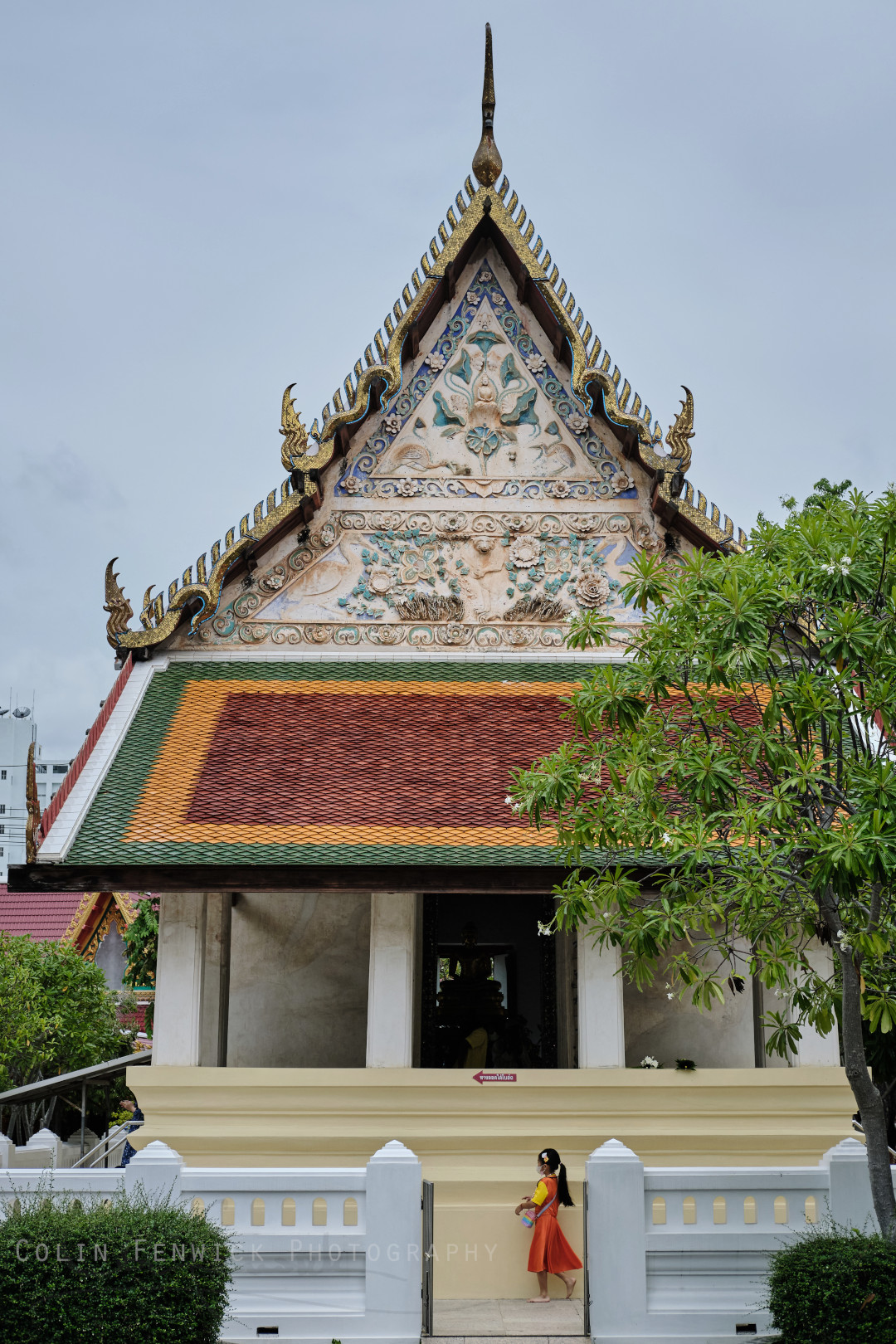
One of the older Thai Wats still operating, it largly gets forgotten in favour of the newer, grander and larger Wats around Thailand, but Wat Pa Pradu really is an amazing place to visit.

You can view the photos from my previous visit here.
Sanctuary of Truth Revisited

It’s been just over 3 years since I last visited the Sanctuary, and it’s still as magnificent as I remember it. One of Thailands better tourist attractions it costs 500 Baht for both Thai’s and foreigners, which is nice, considering many other places charge the ‘farang tax’.

Unlike last time, all visits are managed with tours, so you can’t enter the site until the next tour starts. The tours last for about 45 minutes and after that you can wander around the sanctuary at your own leisure. Our guide was Om, who was knowledgable, with a great sense of humour.

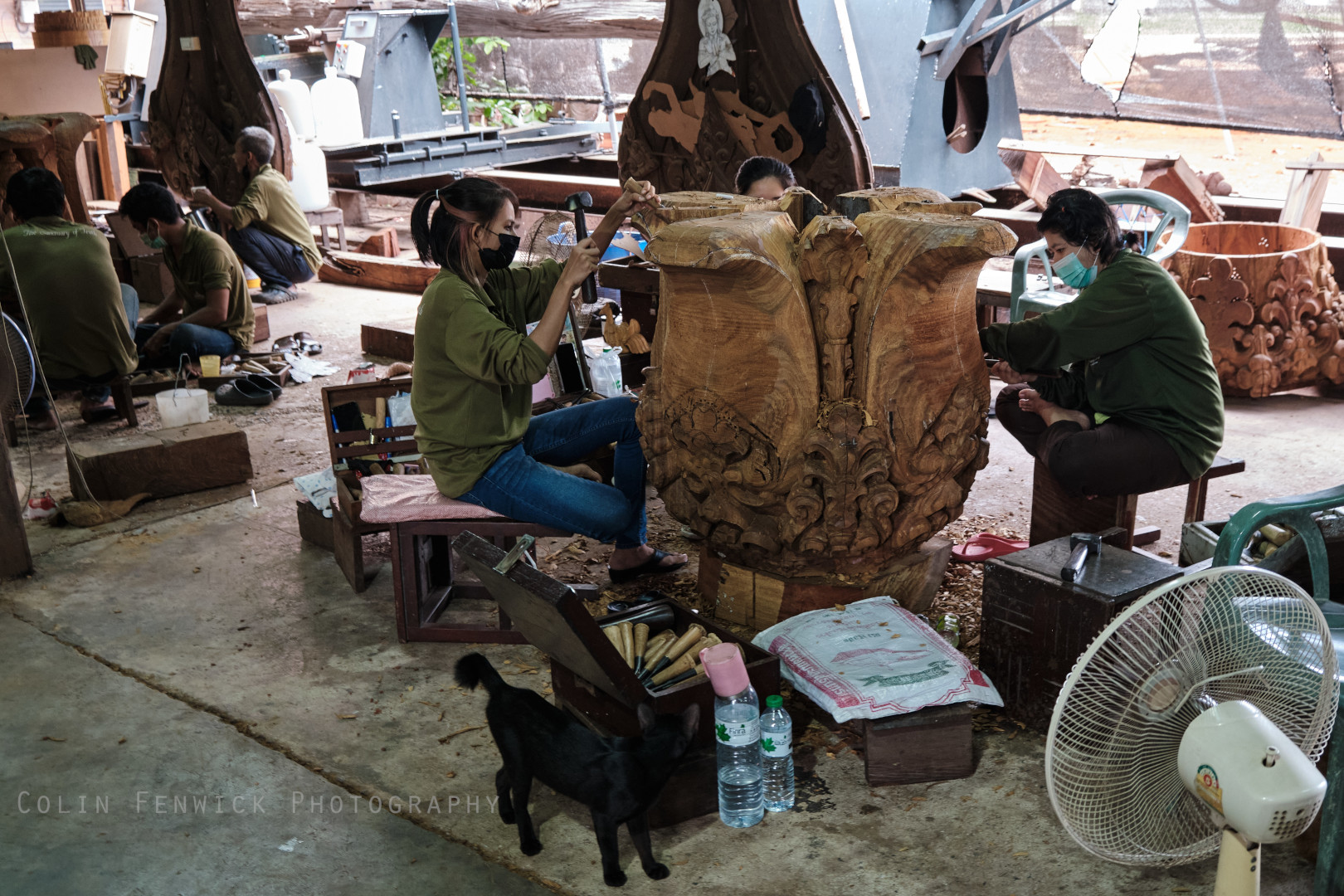
Workers hand carving wood

The tour takes in the workshop, a model of the building and the building itself. Om shared the significance of each area of the Sanctuary, set out to represent the seven truths, each one representing a tenet of human existence, ranging from who we are, how we live, our place in society and the importance of the family. Obviously these seven truths are rooted in Buddhism, but they are represented in a way that is also non-theological.

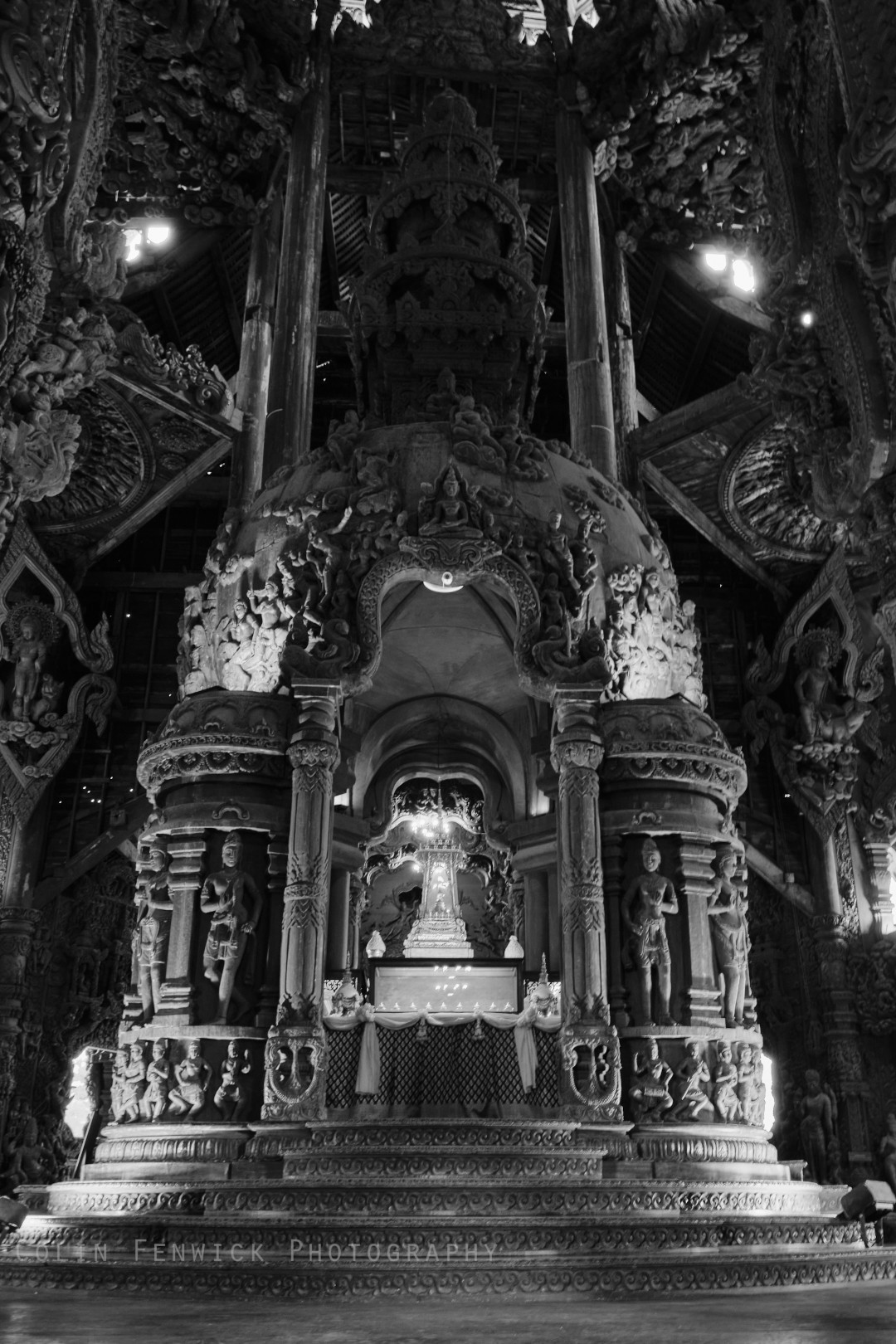
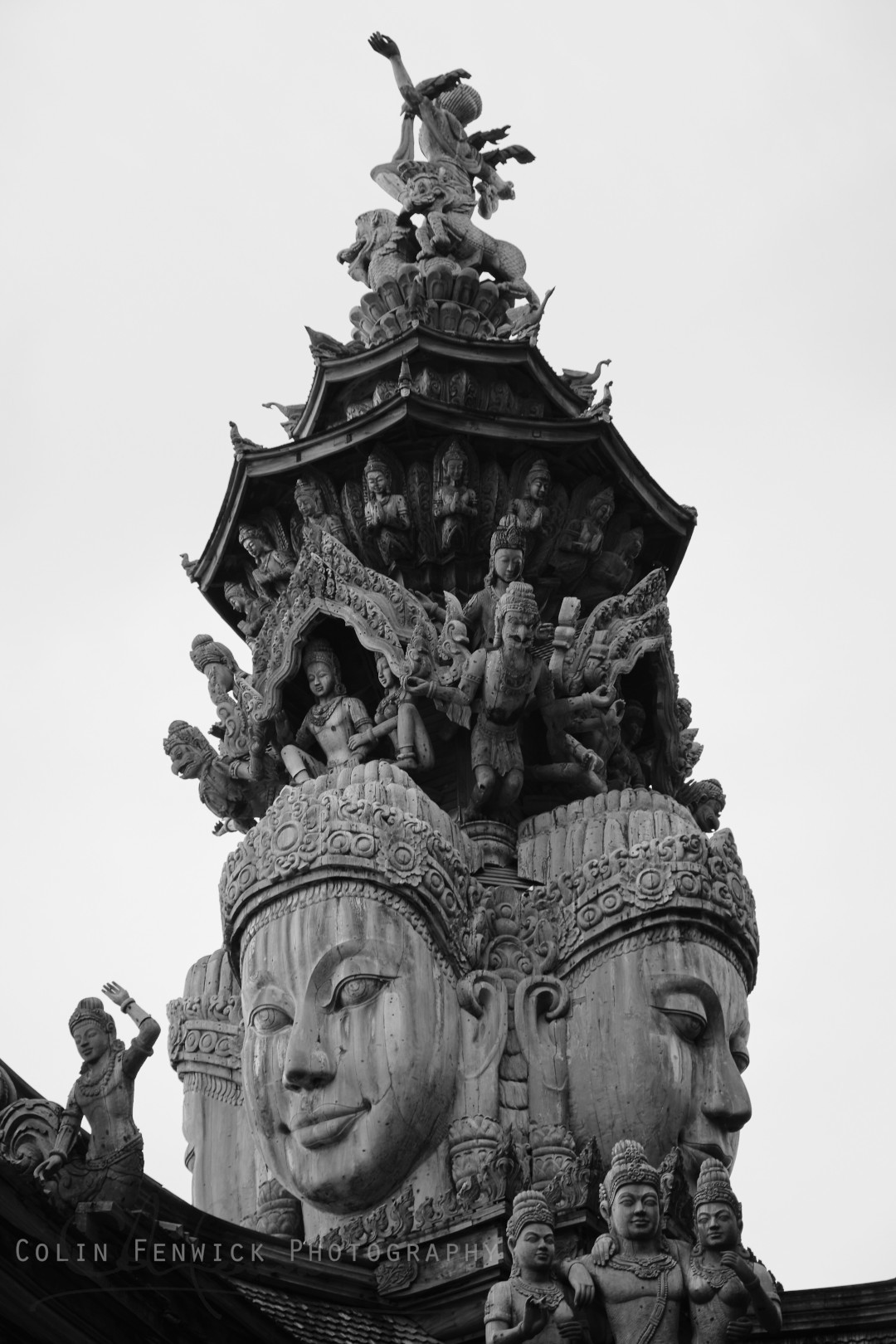
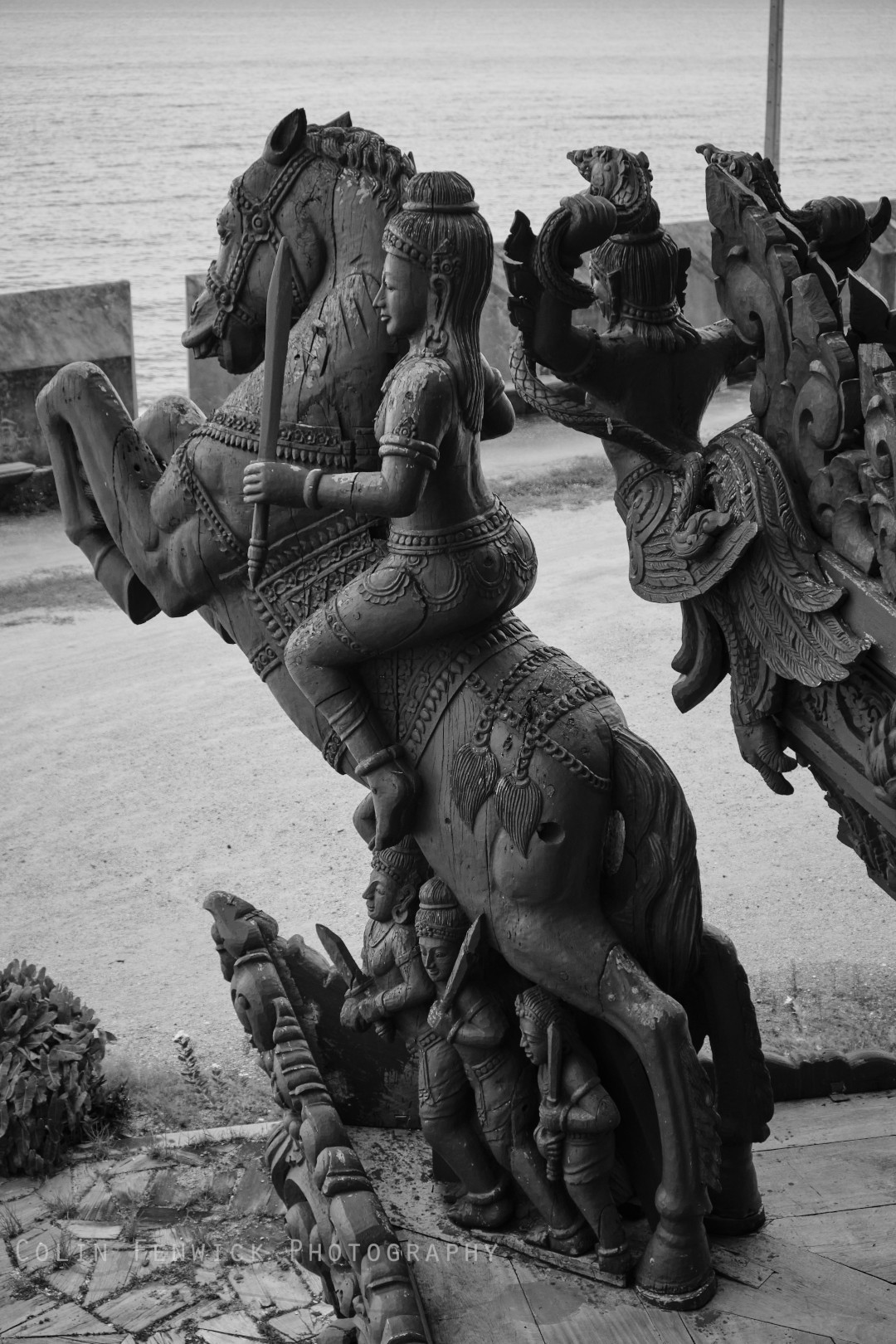
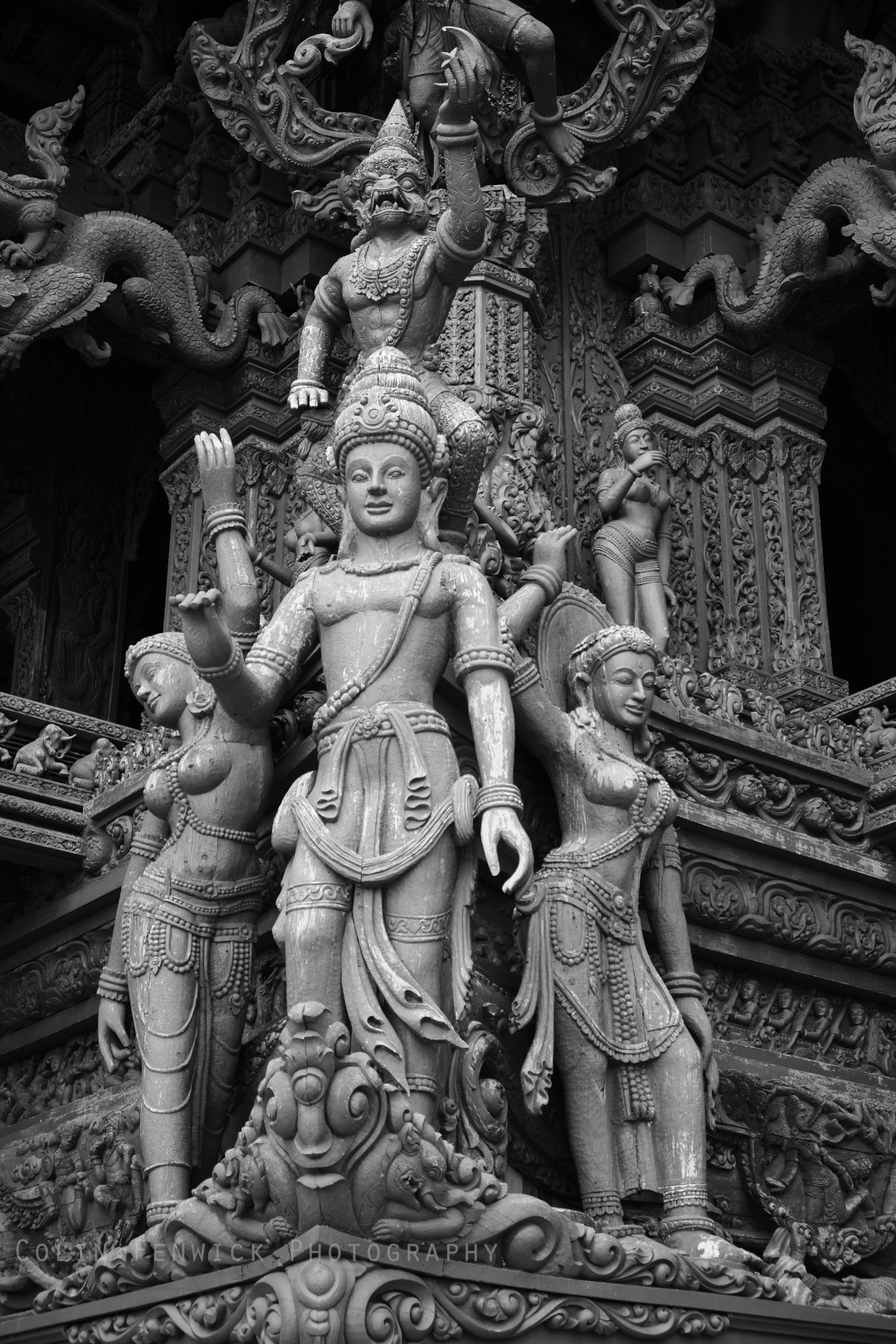
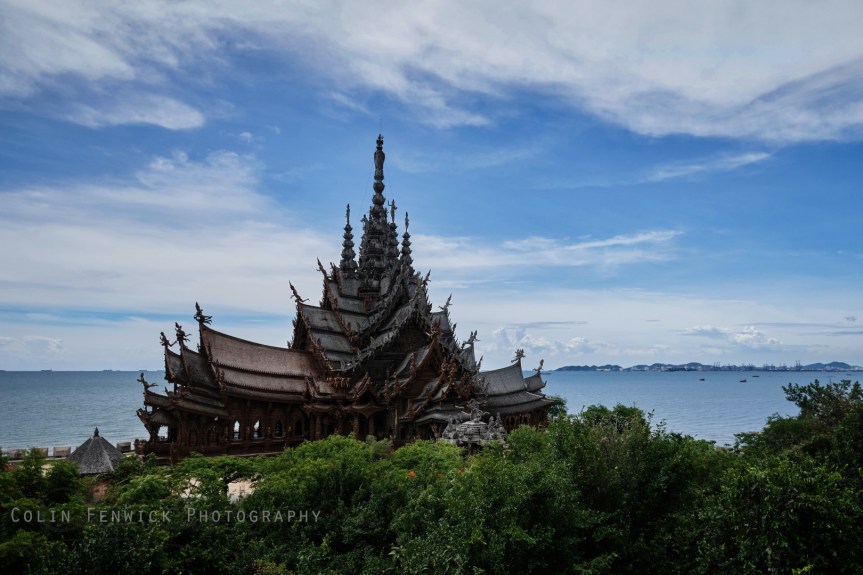
As interesting as the meaning behind each part of the Sanctuary is, it’s the structure itself that impresses the most. Although it looks like a temple, it is actually a museum of Buddhist thought, mythology and style and there is a feeling of awe when you step inside the building. It is a similar feeling to stepping inside a great cathedral. There’s something about the scale and detail that gives you that feeling.

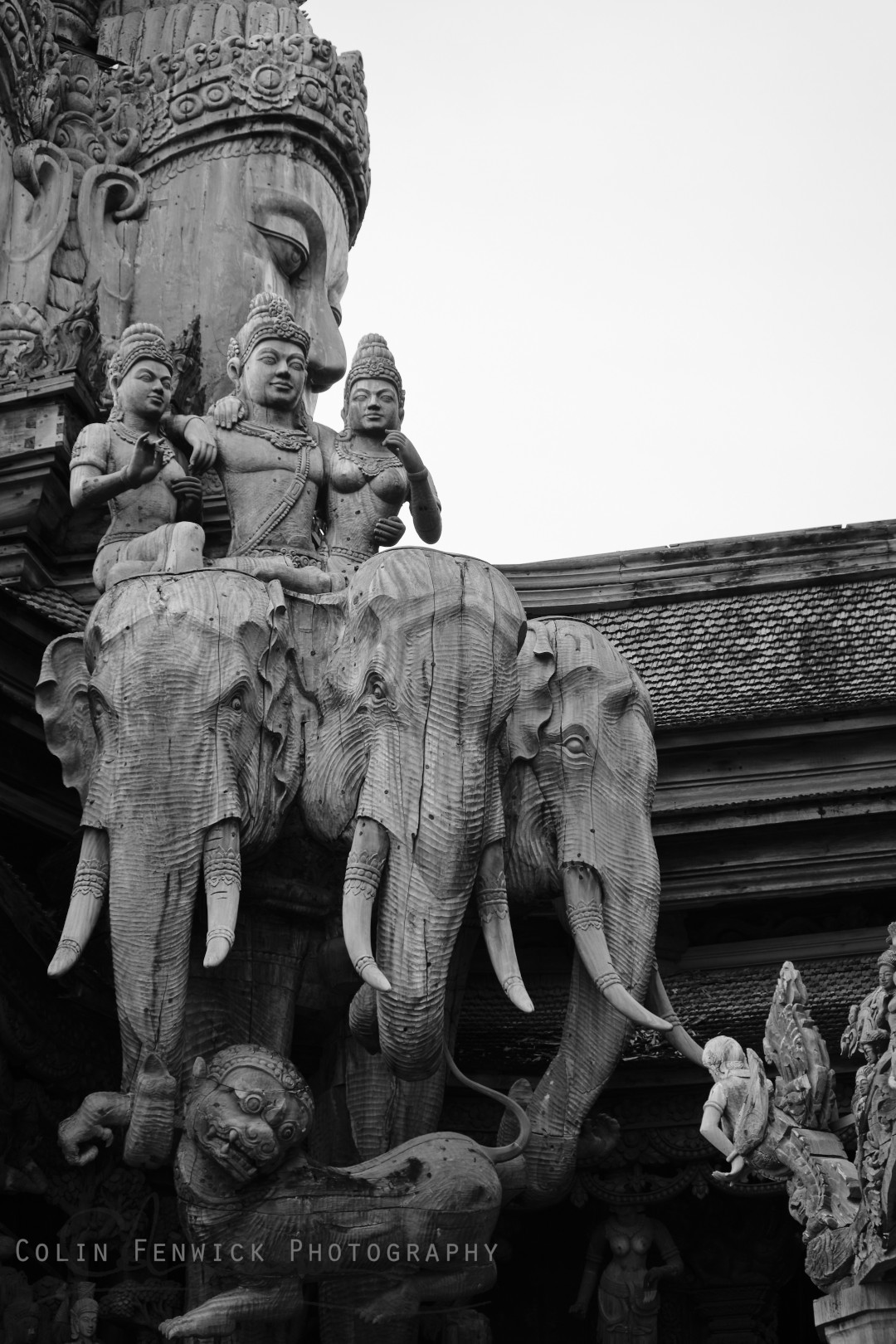
Made completely of wood (There are a few metal nails here and there if you look for them), it is the largest wooden building in the world today, standing at 105 meters tall and about 100 metres wide in each direction. Construction began in 1981 and when I visited 3 years ago they said it would hopefully finish in 2025, but there was no deadline given this time, so basically it get’s finished when it’s finished.

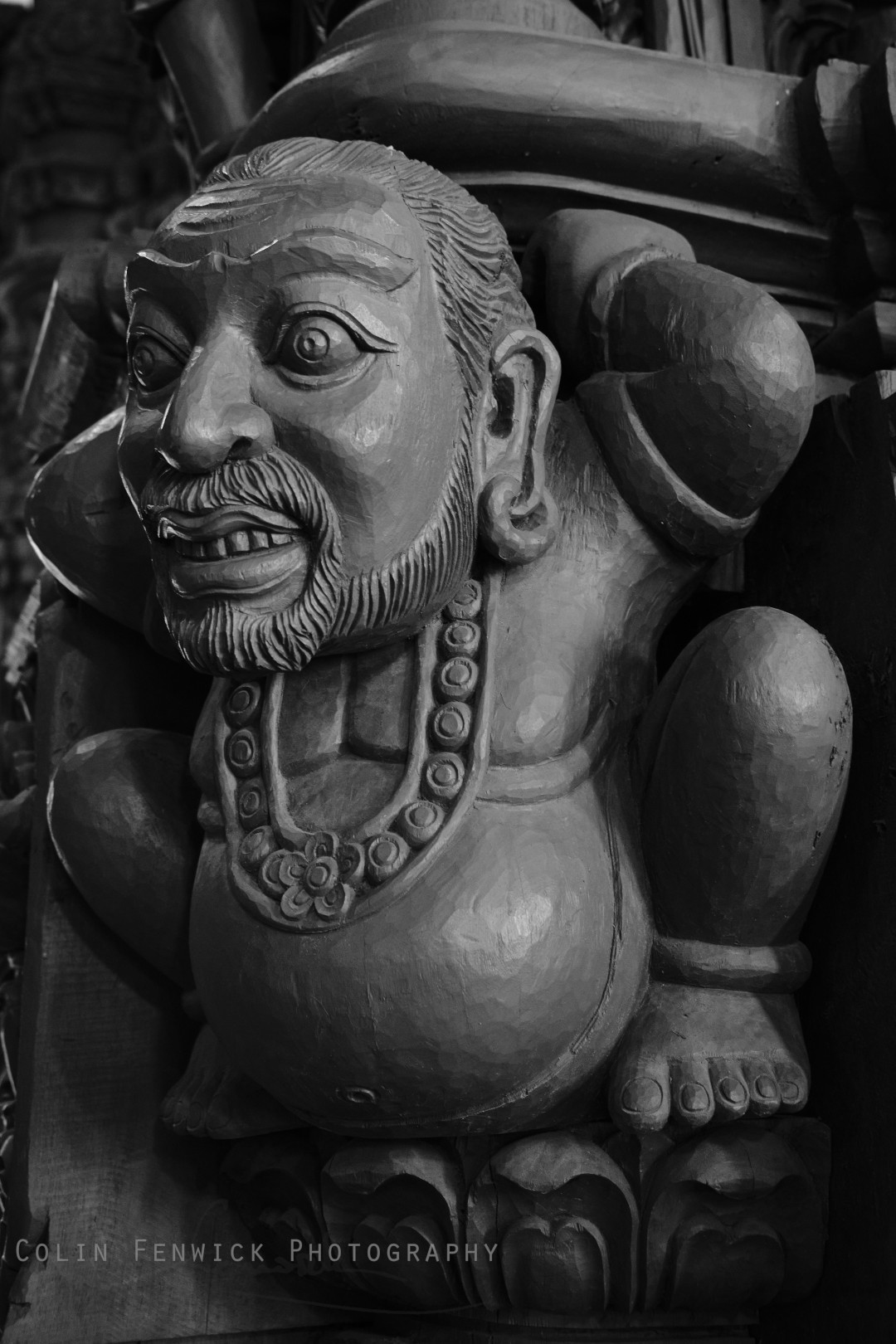
Parts of it are still to be decorated, but the detail on each and every bit of the building is astonishing. Each part of the interior and exterior is hand carved – the exception being the larger colums which are turned using machinery.

It really is one of the best places I’ve visited and well worth it if you find yourself in Thailand.