The Ranga Model 3C Fountain Pen

It’s been a long time since I really used fountain pens in anger. Once upon a time I used to write a first draft with pen and paper and then type it up to create the second draft, but somewhere in the recent past I stopped writing with pen and ink and started doing everything on a laptop. Recently I’ve realised I spend far too many hours in front of a screen and it is time I started unplugging and spending more time in analogue pursuits.

I’ve long been a fan of fountain pens and they’ve been my preferred writing tool since I was a kid and so I dug out the last remnants of my greatly diminished collection. (There were only three survivors).

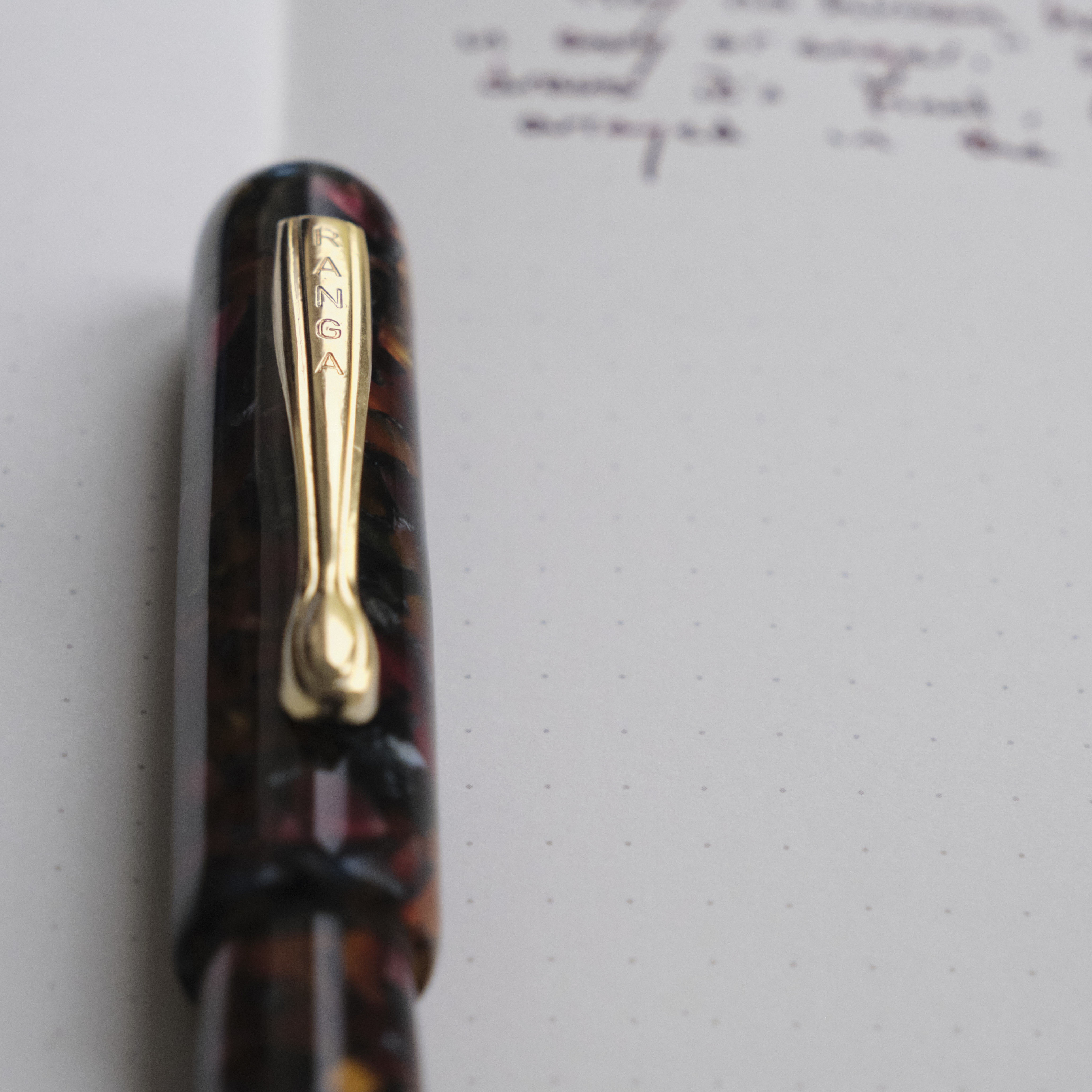
It was time to rebuild my collection and soon had a rather large wish-list. While watching review after review, one pen company stuck out more than others and that was an Indian company making hand made pens called Ranga. I’d heard of them before, but never paid much attention to them, until now. They have a large number of models, but the 3C was the one that appealed the most and the moment I saw the red, gold and blue Cracked Ice Acrylic, I knew that was the one for me. The ordering process was simple and not only was there a choice of acrylic, but the choice of clip and nib. Two weeks later it arrived – much quicker than expected.

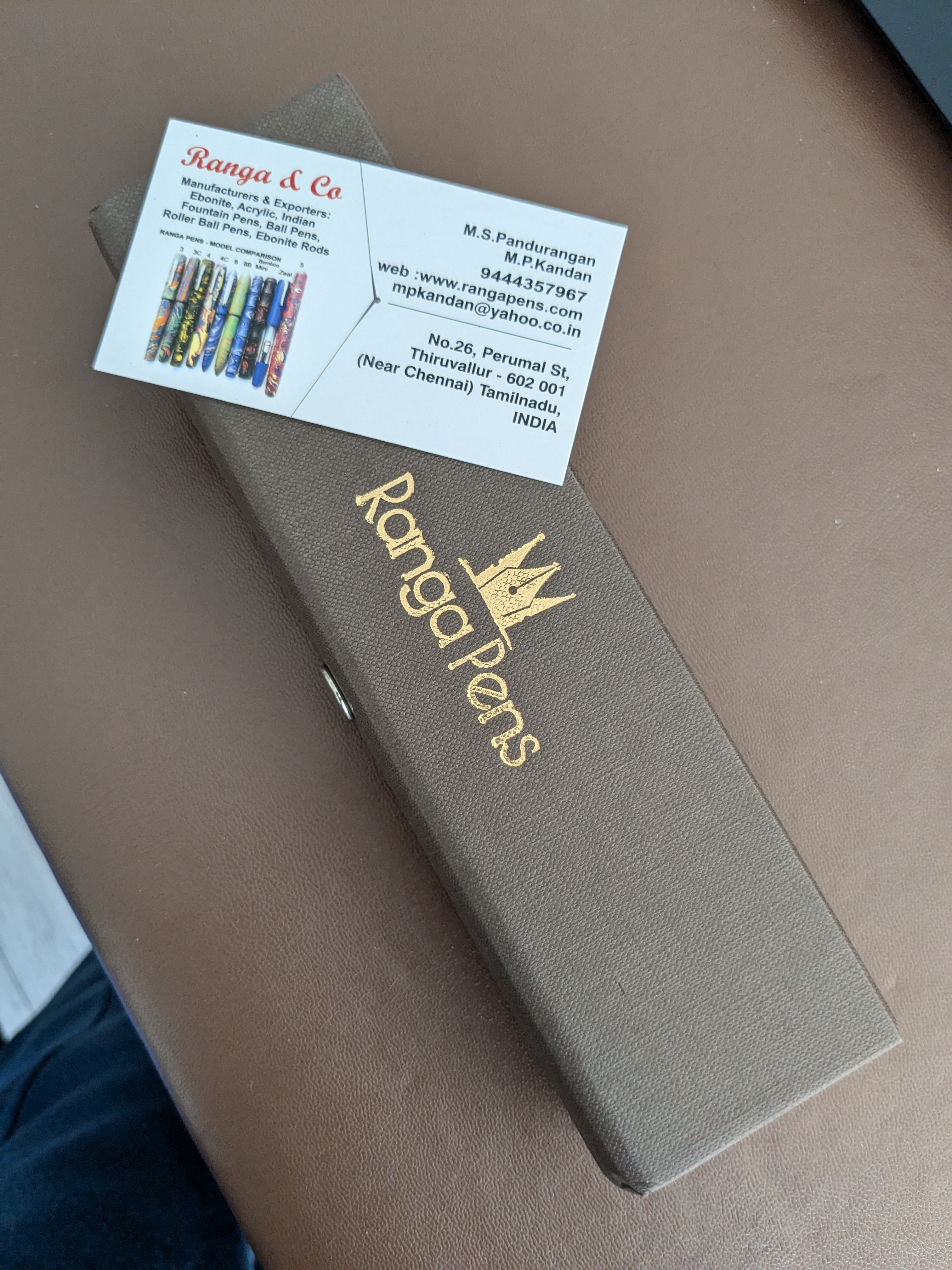
The pen came boxed, wrapped in newspaper and then placed in a cloth bag and hand stitched, which I thought was a nice touch. Opening the box I was surprised by a cheap Jinhao 599A Lamy Safari clone which was included as a free extra (a very nice touch), along with an eyedropper. I can’t think of another pen company that treats the customer so well?

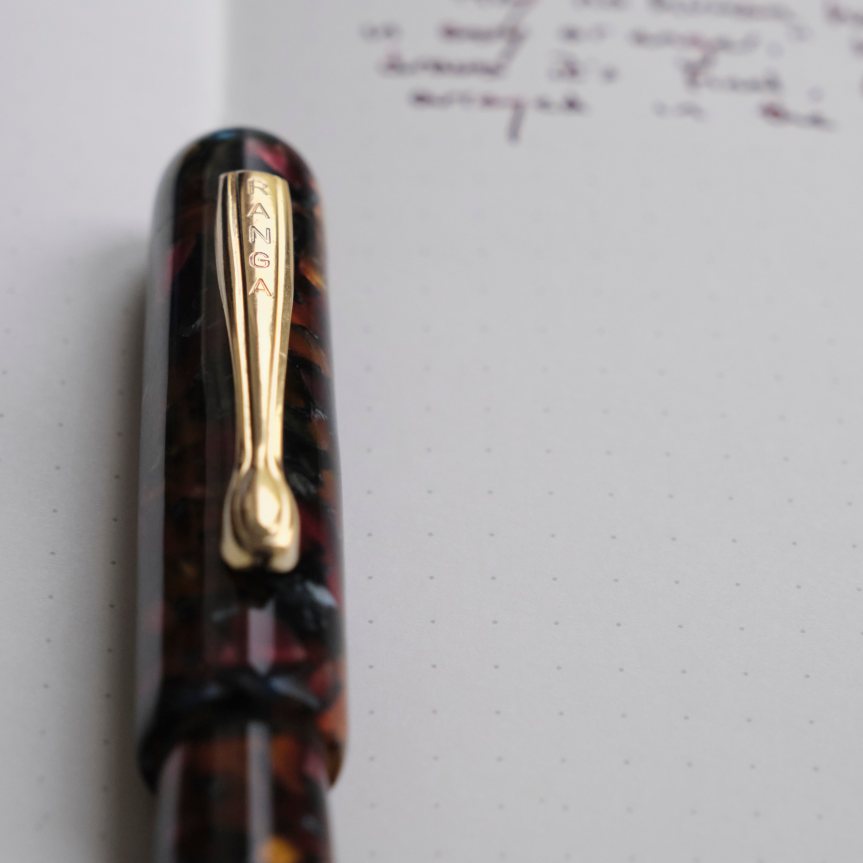
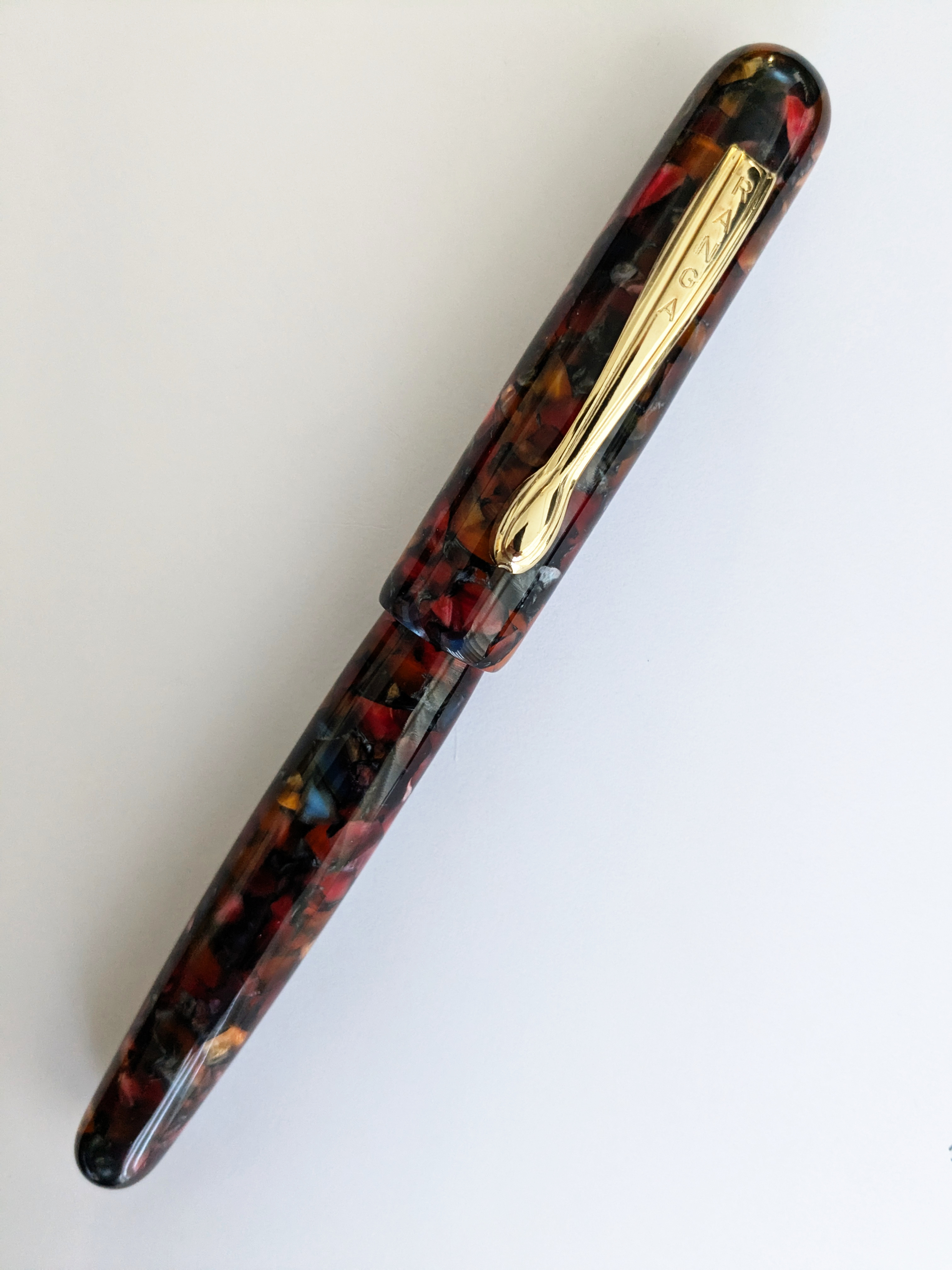
Of course, the packaging and the free pen are one thing, but if the main attraction is a disappointment then no amount of freebies is worth it. When I slid the pen from it’s plastic sleeve, I was very happy. My expectations were not only met, but exceeded, by a country mile. The resin is stunning with a not-quite-black base and flecks of red, amber gold and sky blue resin. Considering it is a handmade pen, the workmanship really shows. I believe the appropriate term is craftsmanship. The acrylic is well polished and brings out the colours. The top of the cap is a separate piece and you can just about feel the join. The clip is a nice design and has just the right amount of spring; not too stiff and not too light.

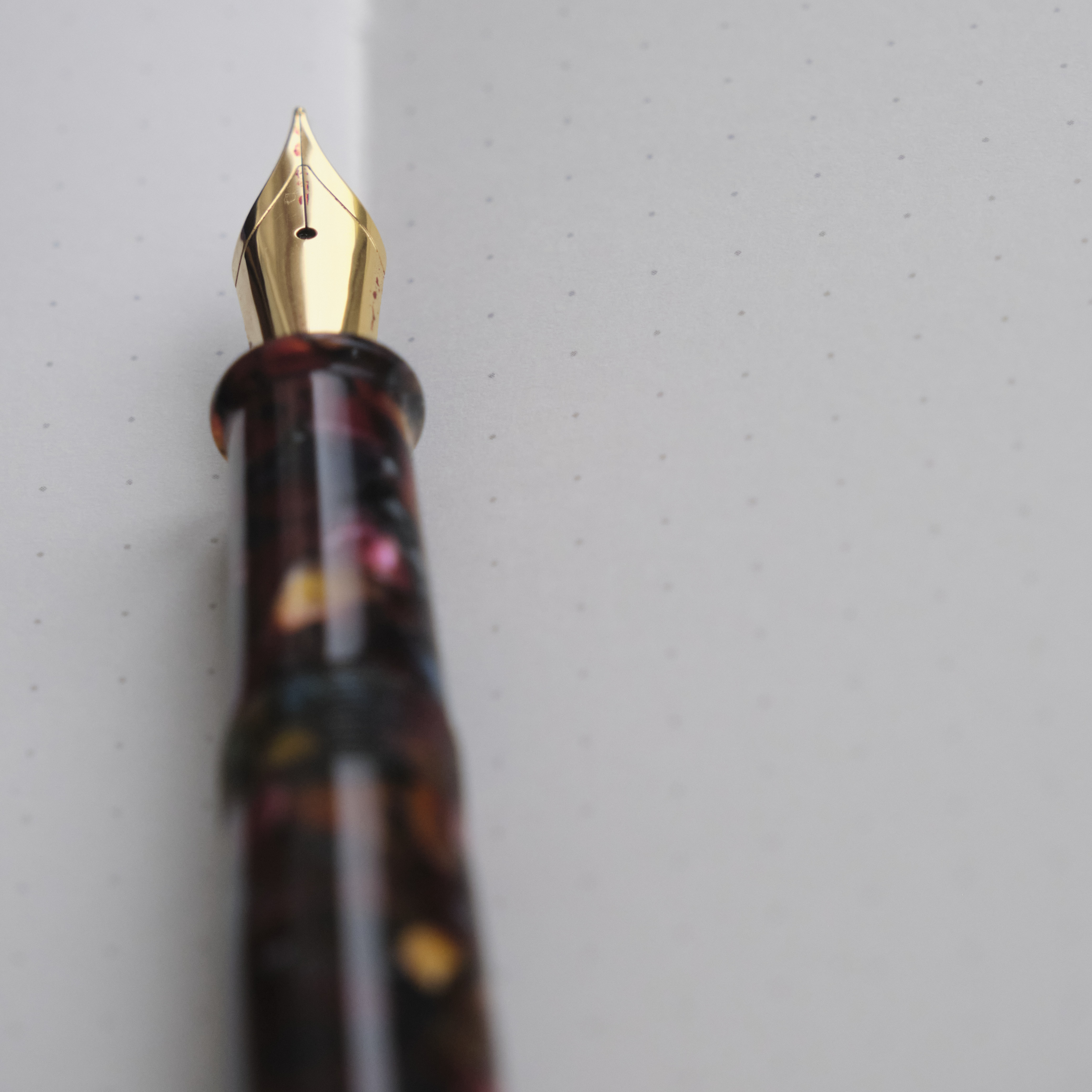
The pen has rounded ends, having a torpedo shape and is, what is now considered, a medium sized pen. Compared to something like a Parker Sonnet or Jotter, this is quite a substantial pen, however, it is lightweight and comfortable to write with. The grip is long enough that I can hold it without touching the threads, though the threads aren’t sharp. There is also no step down from the barrel to the section, which I prefer. At the end of the section is a flared end and the fingers sit nicely against it. Again, it’s just a well thought out design that adds to the writing comfort. The barrel and section threads are resin to resin with no metal parts, so the pen can be eye-droppered, and the section threads are already coated in silicon grease if you want to do that. The cap to section threads are also resin to resin, so no worries about the threads wearing out.

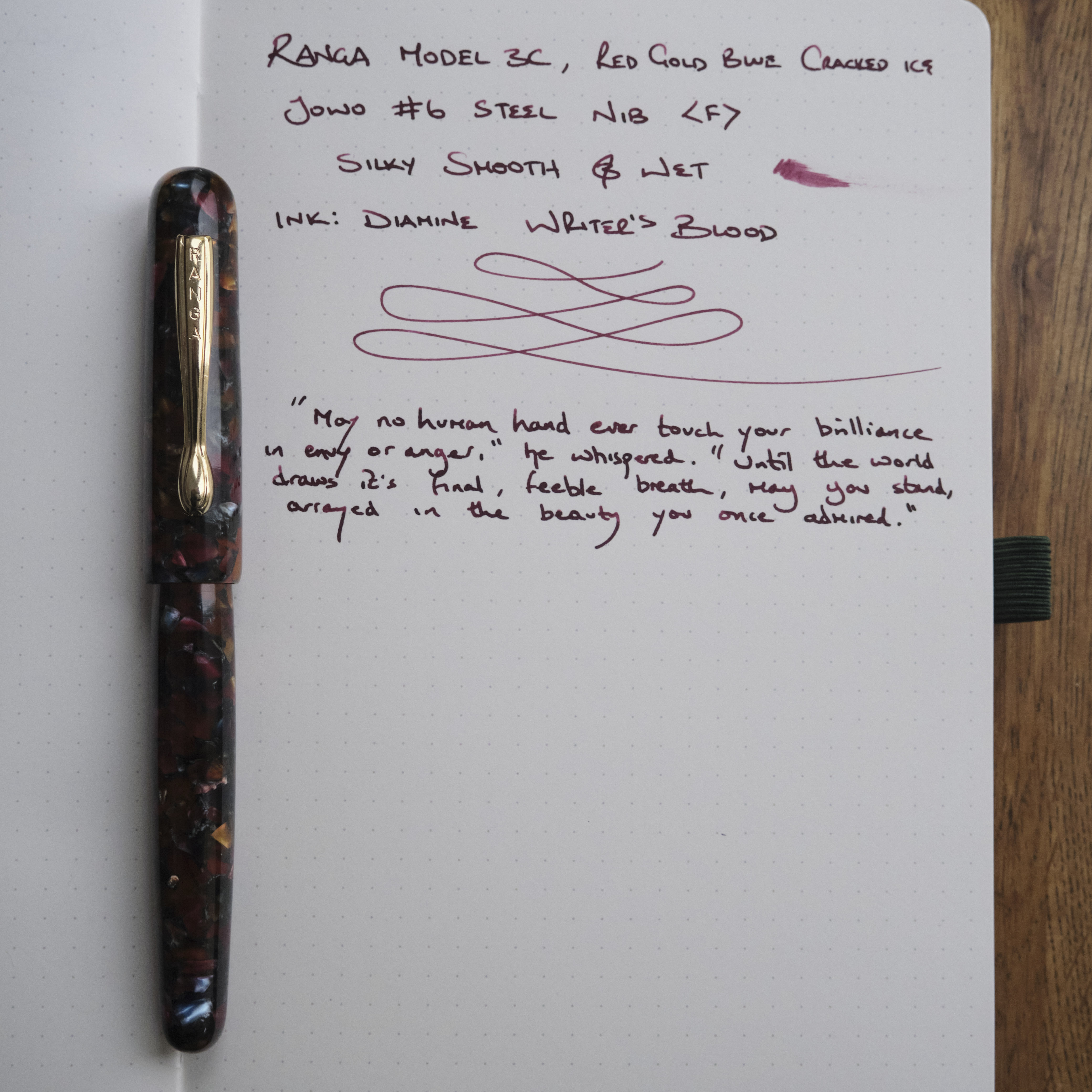
The pen comes with a huge choice of nibs and for this I went with a Jowo #6 steel nib in fine point, and being a German made nib it is true to a Western fine. The included Schmidt converter had water droplets in it – a sure sign the pen had been inked to test and tune the nib, which I like to see. Again, it shows a level of care for the final product that they do this and boy does it show when writing. The nib is silky smooth, probably the smoothest writing experience I’ve ever had. Really is a joy to write with, in fact it makes me want to pick it up and write. The nib is also wet,  helping the nib glide across the paper. Being fitted with a Jowo nib, the available options are extensive and also makes nib swaps easy, though I probably won’t be touching this nib as it writes perfectly for me.

Gallery

Dimensions and Specs

  • Make: Ranga
  • Model: 3C
  • Colour: Red, Gold and Blue Cracked Ice (Very similar to Leonardo’s Millefiori resin)
  • Length with Cap: 150mm
  • Length without Cap: 138mm
  • Length Posted: 183mm
  • Weight (with inked converter): 27gm
  • Barrel Diameter: 14mm
  • Section Diameter: 11mm-8mm

Wrapping up

I honestly can’t say enough good things about the Ranga 3C. A beautiful hand-made pen that provides the best writing experience I’ve ever had with a fountain pen. My only complaint is that now I want another one. I suppose there are worse problems to have 😉.

Canon nFD 35-70 f4 Review

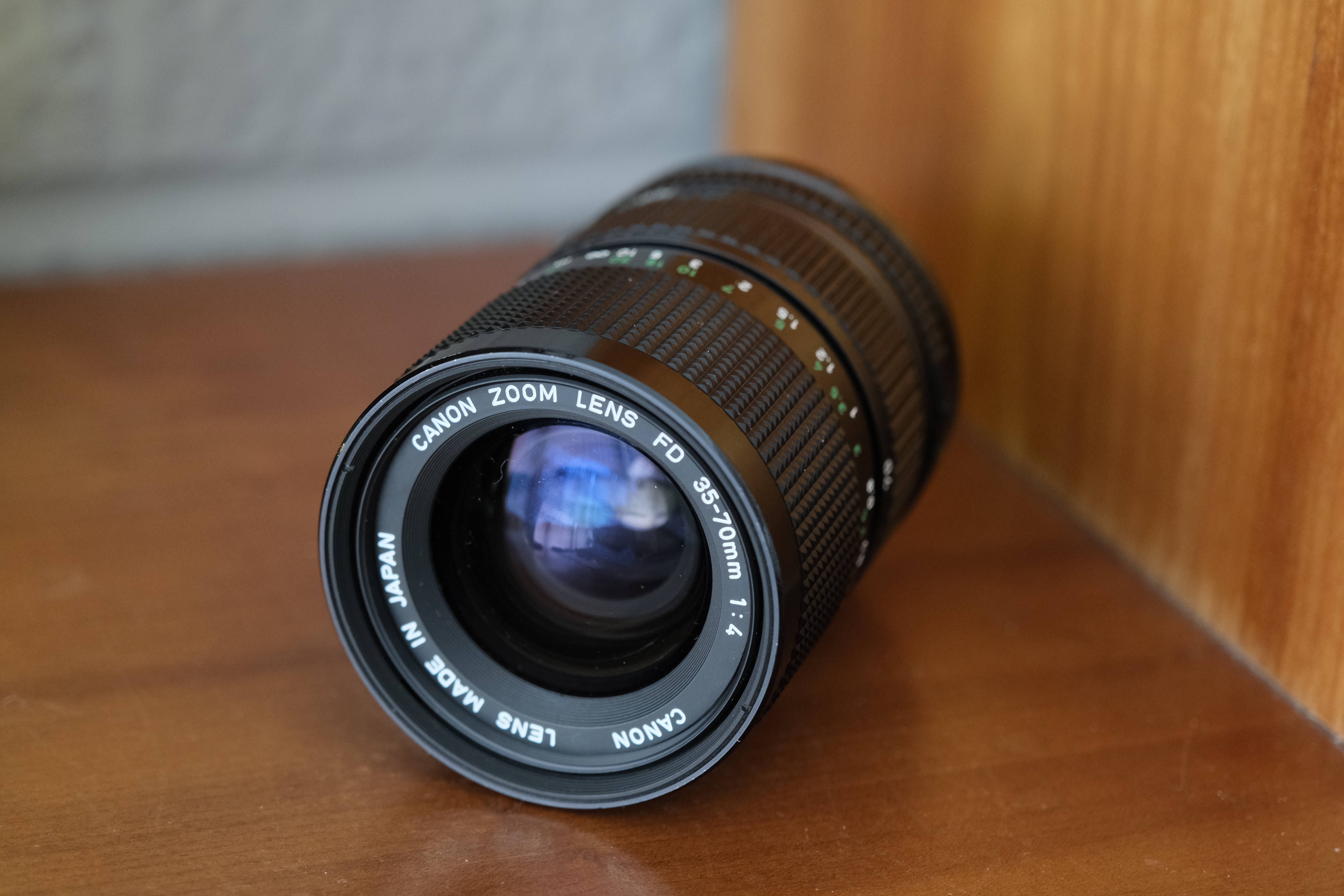
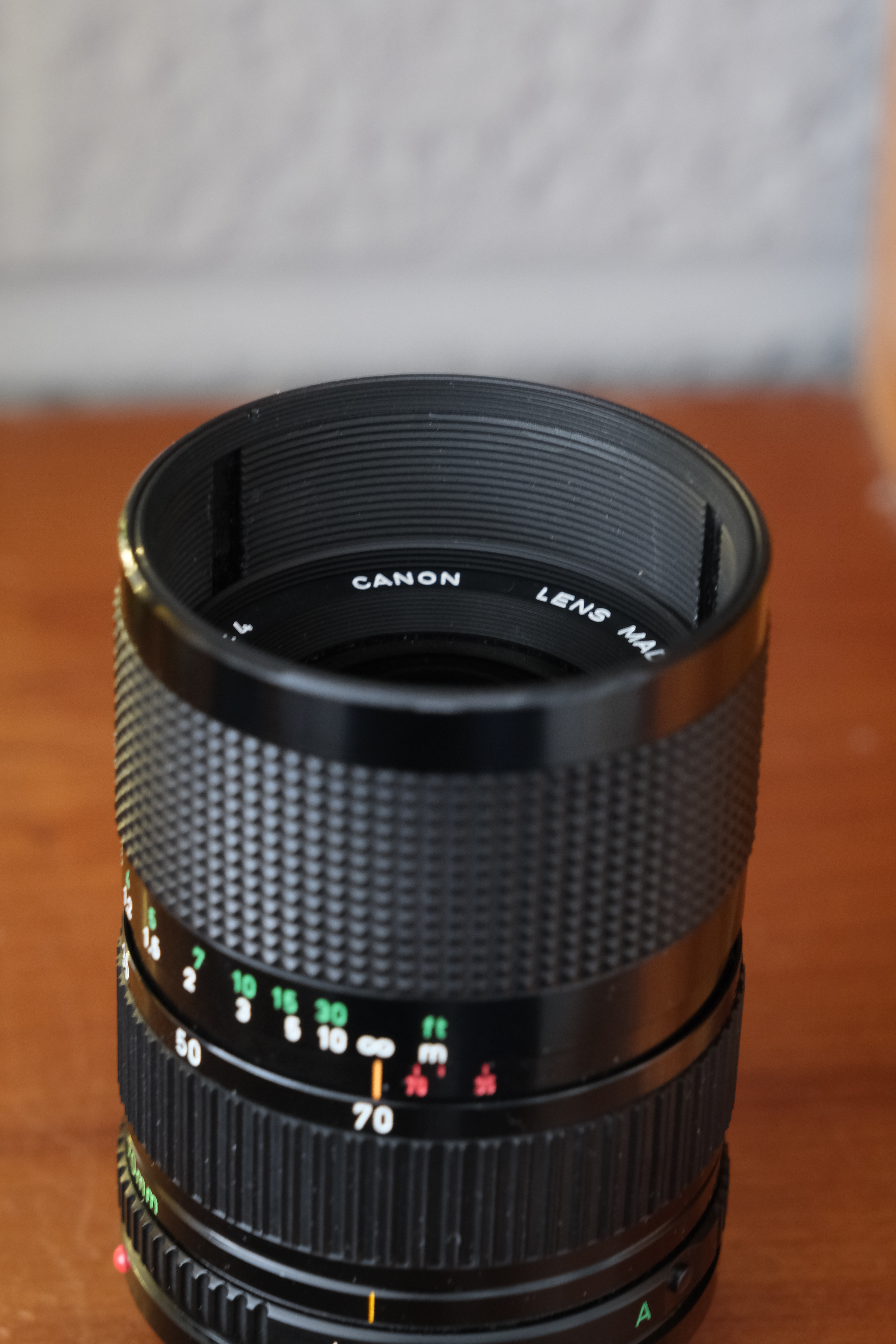
The Canon nFD 35-70mm f4 lens

Vintage lenses are having a bit of a renaissance thanks to mirrorless cameras. Famous lenses like the Takumars and even old Nikon pre-Ai primes, are enjoying a resurgence in popularity, but no-one cares about vintage manual focus zooms. Right?

The Canon nFD 35-70 f4 is a cheap, unloved, forgotten zoom lens that can still be bought for around £50, but is it any good?

The specs

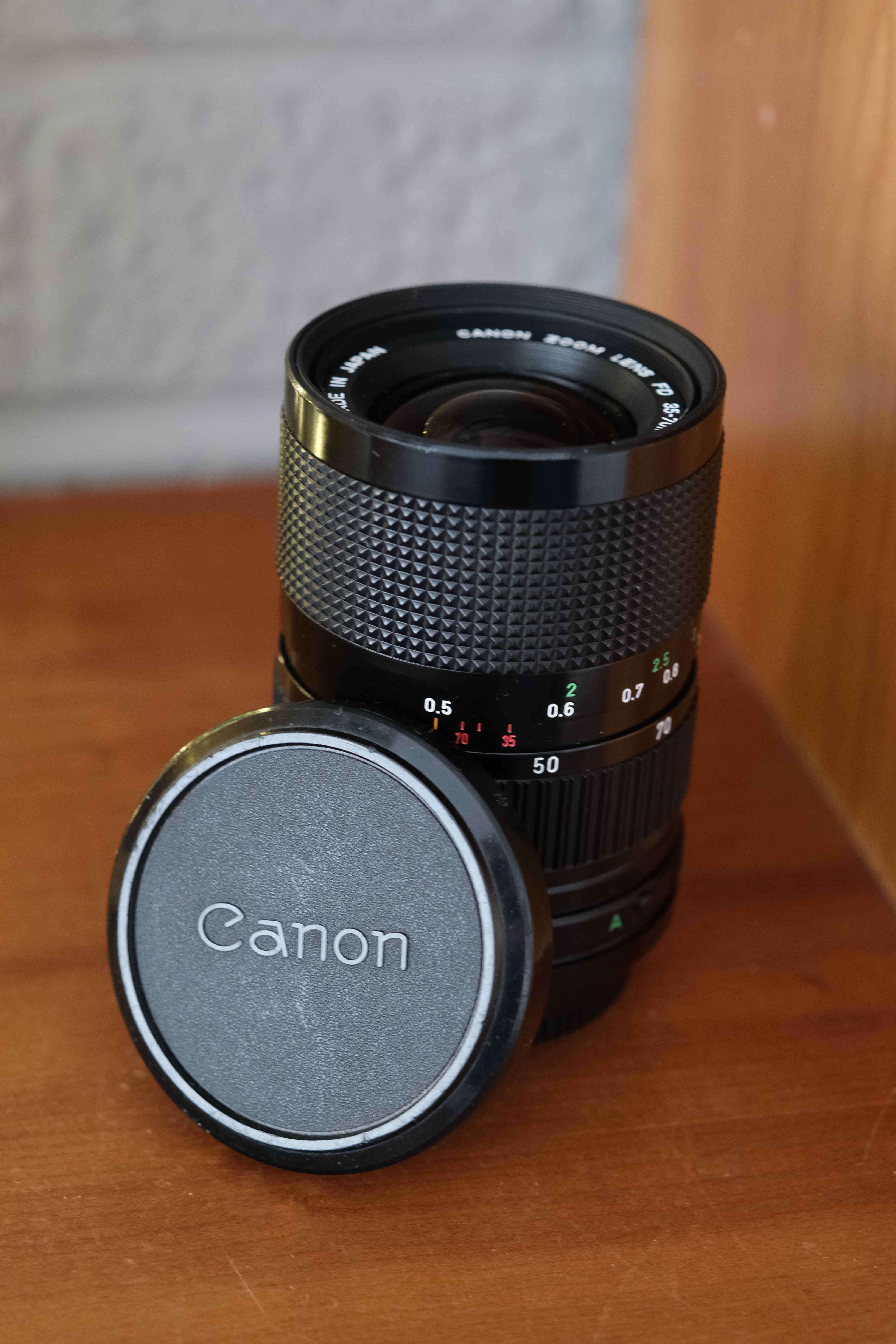
Canon’s 35-70mm f4 zoom is an FD mount lens of the nFD, or new FD, type, which just means it lost the fiddly breach lock mount in favour of a bayonet style mount. It was first sold in 1979. It has 8 elements in 8 groups and 6 aperture blades. Aperture ranges from f4 to f22 with half stops. Lens diameter of 63mm and an overall length of 84.5mm and weighs in at 315gm.

The filter thread is 52mm, but good luck getting a filter on and off, as the lens zooms in and out within an external tube which serves as a built in lens hood, which is probably why it comes with a push on lens cap.

The lens has a minimum focusing distance of 50cm and the focus throw from minimum distance to infinity is just under 180 degrees.

Build Quality and Feel

The build is plastic and feels a bit cheap. I would say it feels like most cheap zoom lenses of the eighties. The focus and zoom rings are light and not well damped, which doesn’t help the cheap feel, but the aperture ring has a firm feel with nice clicks with each half stop (much better than the aperture rings on their SSC primes which feel a bit flimsy). Safe to say, this isn’t as rugged as say a Nikon AI lens.

In its favour is the size and weight. This is a light and compact zoom lens, and given it has a constant F4 aperture, that’s not bad, even in the age of manual focus lenses. It gets a bit long when mounted on an adapter for a mirrorless camera, but its still a light and compact lens and nicely balanced on the Fujifilm X-T3.

In Use

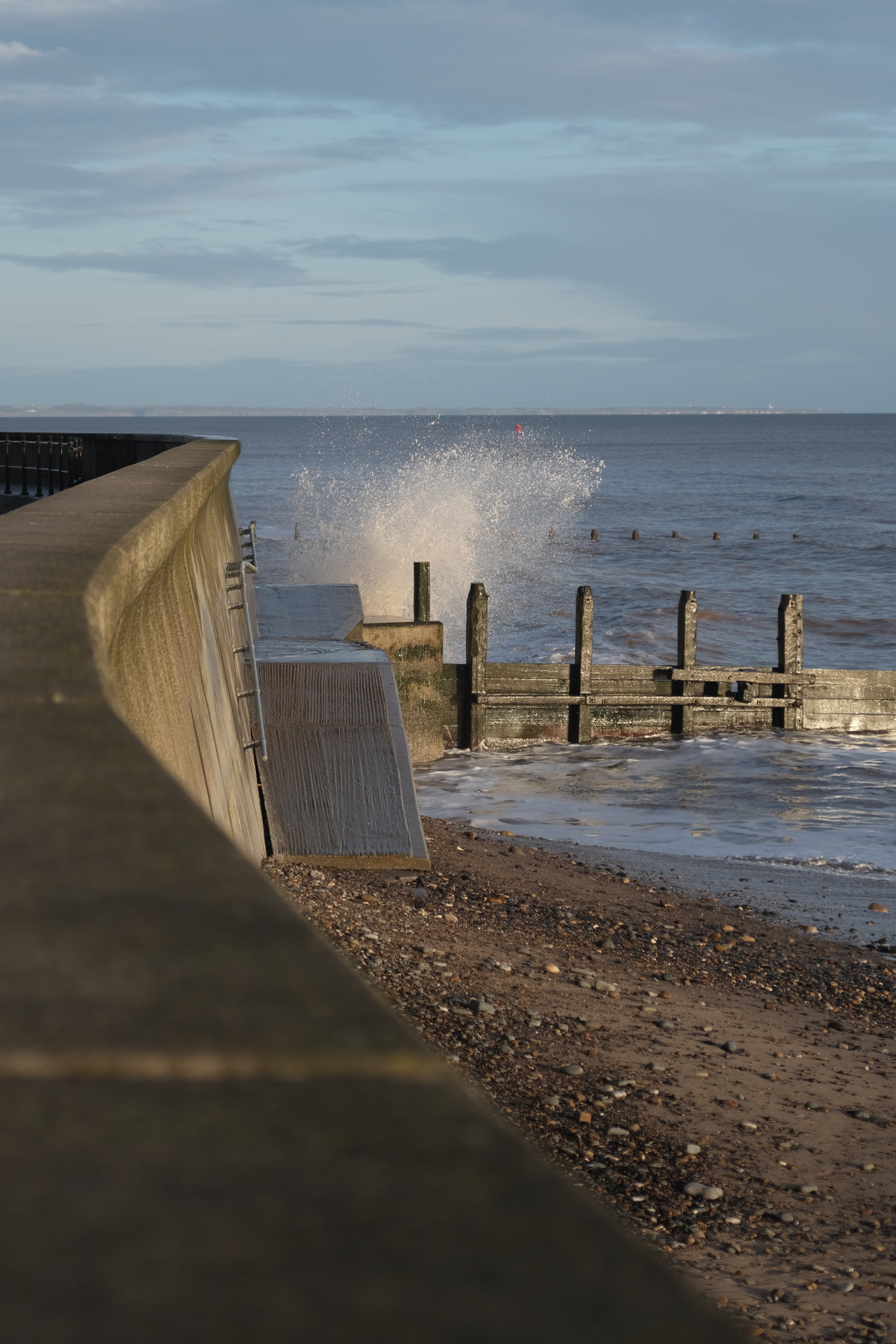
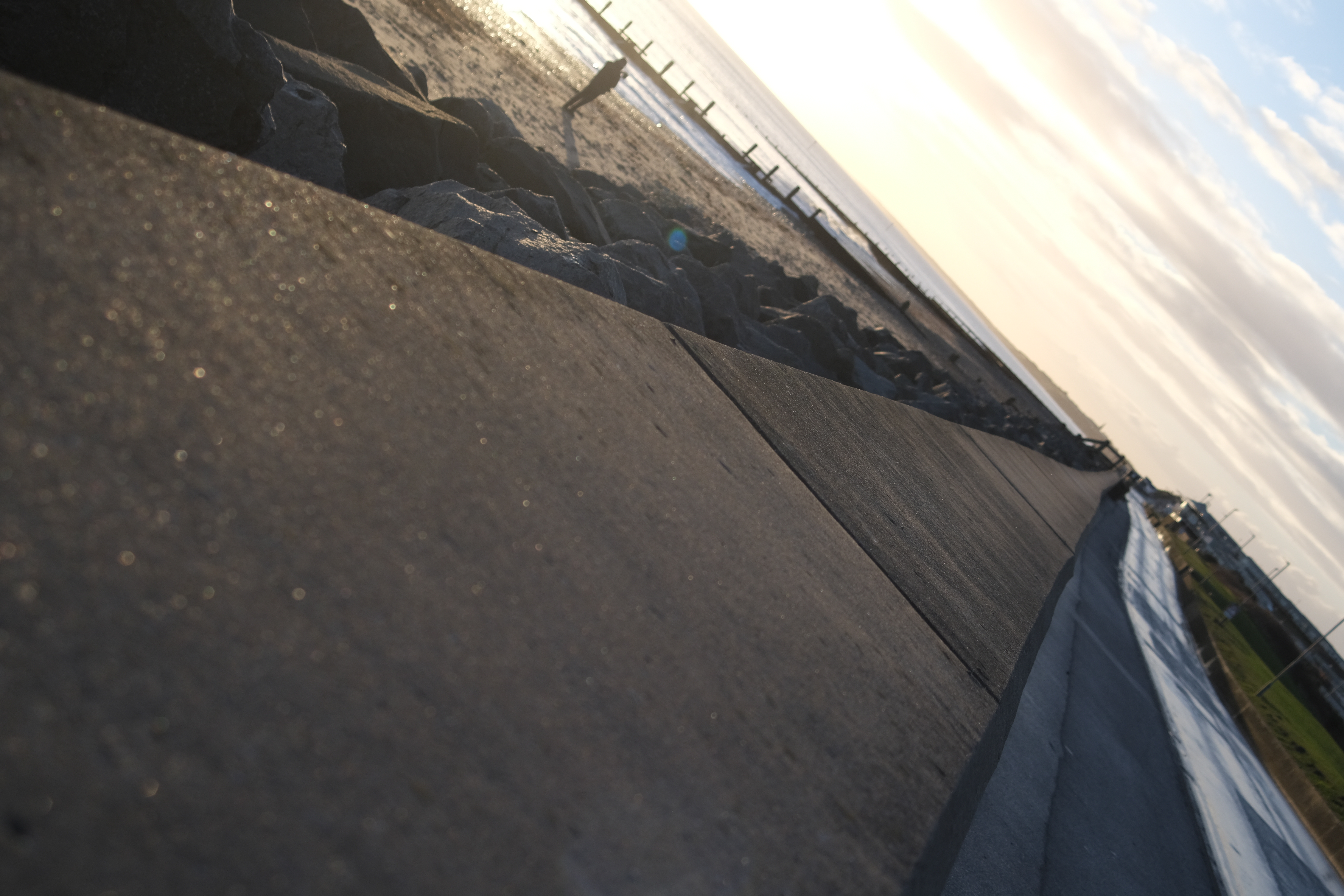
I took it out to Hornsea beach back on New Years day and was pleasantly surprised not just at the quality of the images I was getting, but also how easy it was to focus. Not being well damped didn’t hinder the focusing at all. I usually prefer a longer throw to really nail focus, but at a whisper under 180 degrees, it was just about right.

And as mentioned earlier, the lens was nicely balanced on the X-T3. The zoom does extend when zooming and focusing, but you don’t notice it as the front element never protrudes beyond the front of the zoom ring/built in lens hood. It was actually very pleasant to use and I must admit, a little bit fun.

Image Quality

All images are straight of camera jpegs.

I was surprised at just how good the images look. It renders colours and contrast nicely and overall, the images look sharp and punchy when the light is good, but the lens tends to lose contrast when the light get’s a bit dull. Like other vintage lenses it loses contrast when shooting into the light, and there is flaring, though it seems to be well controlled.

I didn’t notice much in the way of chromatic aberrations, though I’m sure in the right situations, they will show up, as is the case with most vintage lenses. Thus far though, purple and green fringing look to be well controlled for a lens of this age.

Bokeh is okay. You’re going to get soap bubble bokeh balls at F4 and sun stars when stopped down, but on the whole, the fall-off is gentle and the out of focus areas are rendered nicely.

So Is It Worth It?

Overall, the lens was surprising good for the price. Obviously you’ll find these near the £100 because some sellers never miss an opportunity to rip people off, but you can find it under the £50 mark. So is this cheap little lens worth it? It’s not going to replicate the image quality, or bokeh, of fast primes like a 50mm f1.4, but I was really taken aback with how good the images looked. Considering you can get this for half the price of the nFD 50mm f1.4, (and let’s not even talk about how much you’d pay for a good condition 35mm), it’s a good value option if you want to start playing with vintage glass on a mirrorless camera.


Ayutthaya: Wat Chaiwatthanaram

And so we come to the last of the four sites we visited in Ayutthaya, and I’ve saved the best for last. Wat Chaiwatthanaram is the biggest of the four, at least it seemed to be, and also the busiest.

Tourists at Wat Chaiwatthanaram
Tourists in traditional Thai costume at Wat Chaiwatthanaram

Wat Chaiwatthanaram was built in the 1600s on the banks of the Chao Phraya River by King Prasat Thong in honour of his mother. Built in the style of Angkor Wat, the site is made up of a central prang with several smaller prangs and pagodas surrounding it. It has undergone several rounds of restoration over the years and restoration work continues today.

We came here by accident. Our intention was to visit Wat Phutthaisawan, one of the few temples to escape the Burmese in 1766, but we ended up at the wrong place, which turned out to be lucky. Be warned, there is an official car park beside the temple, but on the opposite side of the road there are hawkers trying to wave you into their yards so you can rent traditional Thai costume. There are about 8 or 9 shops opposite, all renting out Thai costume, so if that’s your thing, then this is the place to rent them.

This site was the busiest of the sites we visited with plenty of tourists in Thai costumes taking photos, so something to be mindful of. That said, it wasn’t so busy we couldn’t enjoy the place. This was also my favourite of the four sites we visited and honestly, it felt like stepping into Star Wars. I half expected x-wing fighters to take off.

There was a very different atmosphere here, almost other-worldly. The place felt grander and more expansive and more significant some-how, and strangely enough, this felt the most peaceful and enjoyable of the four sites we visited. It was a good end to our two days here.

Ayutthaya is a great place to visit. Culturally significant and lots of friendly people. If you’re debating whether to add it to your Thailand itinerary, wonder no more and do it. I think you’ll find it well worth it.